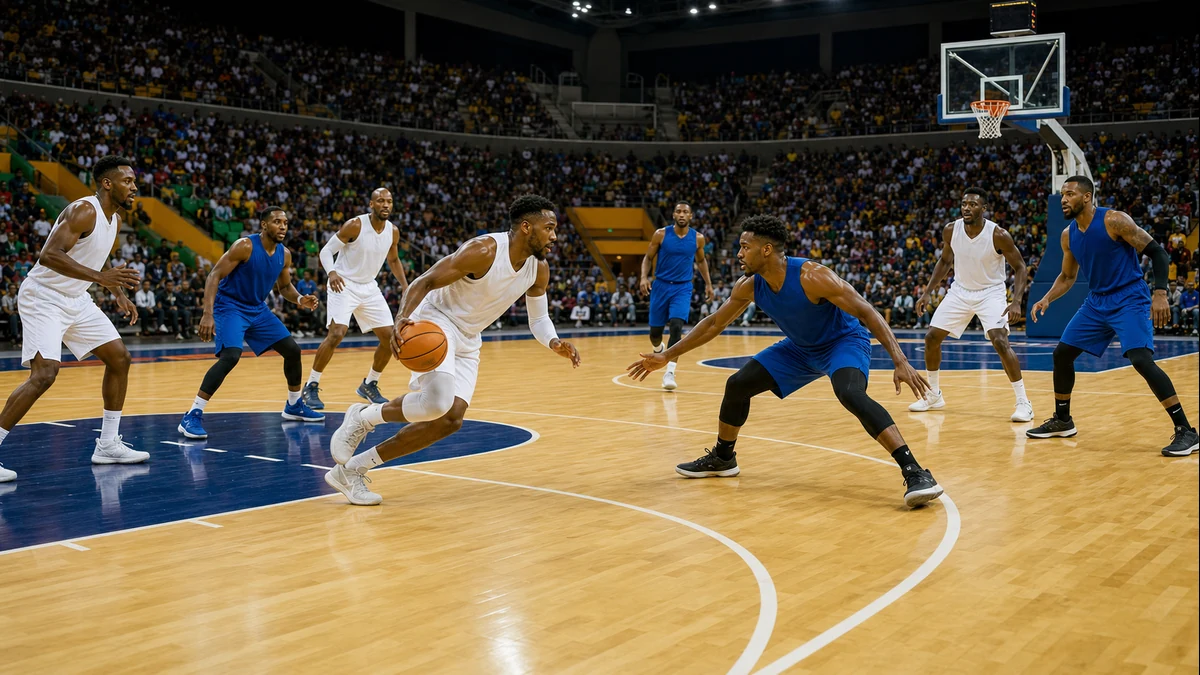


The short version: At Division I schools covered by the House-settlement framework, men's and women's basketball each have a 15-player roster limit. Sport-specific scholarship caps were removed, but schools decide how to distribute aid, so a roster spot and a scholarship offer remain separate decisions.
Key takeaways
- The 15-player limit applies to men's and women's basketball at defendant-conference and opt-in Division I schools.
- A school may offer full or partial athletics aid across its roster, but the rule does not guarantee aid to all 15 players.
- The submitted roster controls who can participate in team athletics activities after the deadline, subject to narrow exceptions.
- The designated-student-athlete exception is a dated transition protection, not a new general extra-roster pathway.
- Scholarships, direct institutional benefits, and third-party NIL are related to college sports finance but operate under different rules.
What changed after the House settlement?
The House-settlement framework changed the organizing rule for participating Division I programs on July 1, 2025. Defendant-conference schools and other Division I institutions that opt in no longer operate under NCAA sport-specific scholarship maximums. They instead comply with sport roster limits and gain flexibility to offer athletics aid across those rosters. This is a framework for covered schools, not a statement that every college basketball program in every division follows the same financial model. DI Board of Directors formally adopts changes to roster limits how the transfer portal reshaped college basketball
For basketball, NCAA Bylaw 17.2 sets the same number for both sports: 15 players for men's basketball and 15 for women's basketball. The bylaw was adopted June 6, 2025, and became effective July 1. Think of 15 as the ordinary maximum number of countable roster positions at a covered school, not as 15 identical financial packages. NCAA Division I Bylaw 17.2 — Roster Limitations
Does every rostered player receive a scholarship?
No. Removing the old sport-specific scholarship cap gave covered schools permission to distribute athletics aid more flexibly; it did not require a school to fund every available roster position. NCAA's settlement overview says institutions may offer partial or full scholarships as long as they stay within the roster limit. Budget, institutional policy, the written aid agreement, and other financial aid all shape an individual package. Settlement Documents Filed in College Athletics Class-Action Lawsuits college basketball recruiting guide
| Question | What it governs | What it does not guarantee |
|---|---|---|
| Roster spot | Eligibility to occupy one of the 15 countable basketball positions at a covered school | Athletics aid or a specific playing role |
| Athletics scholarship | The school's written award of full or partial athletics aid | A roster position beyond the applicable rules and agreement |
| Direct institutional benefits | Settlement-related payments or benefits provided by the school | A scholarship or third-party endorsement deal |
| Third-party NIL | Compensation from an outside party for legitimate use of an athlete's name, image, or likeness | A roster spot, scholarship, or school payment |
For a prospect, the practical rule is simple: ask separate questions. Is the offer for a place on the submitted roster? Does it include athletics aid, and if so, how much and for what period? What other grants can be combined with it? Who issues the final financial aid agreement? A coach can explain the basketball plan, but the institution's financial aid and compliance offices control the documents that answer the money and eligibility questions. NCAA Student-Athlete Core Guarantees
How does the submitted roster work during the year?
A covered institution submits its roster no later than the day before the first contest used for championship selection or December 1 in the applicable academic year—December 1, 2026, for the current 2026-27 year—whichever comes first. After submission, it can add a player only if the team remains below the limit, and the change must be recorded before the next contest. Once the deadline passes, an athlete generally must appear on the submitted roster to take part in team athletically related activities, including practice, skill instruction, conditioning, and film review, unless a specific exception applies. NCAA Division I Proposal 2025-17 — Roster Limitation Provisions
Roster management after that point is not an unlimited swap system. Basketball is a winter sport, and the adopted replacement provision says an athlete who withdraws from the institution in a winter or spring sport may not be replaced on that basis. Other listed circumstances have their own rules. That is why a family's real case should go to the school's compliance staff rather than being solved from a social-media roster graphic.
What is the designated-student-athlete exception?
The designated-student-athlete rule protected a defined transition group affected by the first implementation of the limits. An institution had to attest that the athlete was or would have been removed from its 2025-26 roster because of the new limit and that the athlete met specified 2024-25 participation or recruiting conditions tied to April 7, 2025. This is not a label that a current recruit can newly claim whenever a team reaches 15.
When properly designated and included on a submitted roster, that athlete may continue participating without counting against the sport's limit while eligibility remains. NCAA's adoption notice also says the exemption follows the athlete regardless of the school for which the athlete participates. It is therefore a temporary protection for an identified cohort, not a permanent expansion of every basketball roster.
What happens to an existing athletics scholarship?
Division I Core Guarantees protect many existing athletics-aid awards. If an athlete received athletics aid during the first year at the institution and still has eligibility, NCAA says the scholarship generally cannot be reduced, canceled, or not renewed for athletics-related reasons. The protected reasons include injury, athletic performance, contribution to team success, and roster management. That protection concerns the aid; it does not rewrite the separate roster-participation rules. NCAA Division I eligibility model
Schools must provide written notice and an opportunity to appeal a reduction, cancellation, or nonrenewal of athletics aid. NCAA also permits athletics aid to be combined with other financial aid up to the institution's cost of attendance. Because eligibility history, the first-year condition, the award document, and the reason for a change all matter, an athlete facing a real decision should request the school's written explanation and appeal instructions.
Where do direct benefits and NIL fit?
A scholarship is not the same thing as a settlement-related direct benefit, and neither is the same thing as a third-party NIL deal. NCAA's settlement materials treat direct institutional benefits as payments or benefits supplied by the school under the settlement system. Institutional NIL payments count toward that benefits cap. Third-party NIL agreements sit outside that cap, although applicable deals must be disclosed and reviewed under the third-party system.
For recruiting conversations, replace one vague question—“What am I getting?”—with four precise ones: roster status, athletics aid, direct institutional benefits, and third-party NIL. Then ask which promises appear in a written agreement, which office administers each agreement, and which conditions could change it. Clear categories make it much harder to confuse a projected opportunity with a binding offer.
A verification checklist for prospects and families
- Ask whether the school is operating under the House-settlement opt-in framework for the academic year in question.
- Confirm whether the offer is a countable roster spot and when the school's basketball roster will be submitted.
- Request the athletics-aid amount, duration, renewal terms, and appeal rights in writing from the appropriate institutional office.
- Keep scholarship, direct school benefits, and third-party NIL in separate rows when comparing schools.
- If anyone mentions a designated-athlete exception, ask the compliance office to confirm the dated eligibility basis.
Frequently asked questions
How many players can a Division I basketball team have?
At a defendant-conference or opt-in Division I school covered by NCAA Bylaw 17.2, the ordinary roster limit is 15 for men's basketball and 15 for women's basketball. Specific transition exceptions can allow a properly designated athlete not to count against that limit.
Does a 15-player roster mean 15 full scholarships?
No. Covered schools may distribute full or partial athletics scholarships within the roster framework, but the NCAA rule does not require every rostered athlete to receive a full scholarship. The written award from the school determines an individual's aid.
Can a basketball player be added after the roster is submitted?
A school may add a player after submission only if it remains below the roster limit, and it must identify the change before the next contest. Replacement rules after submission are narrower and depend on the specific circumstance.
Is a designated student-athlete the same as a walk-on?
No. Designated student-athlete is a specific transition status tied to implementation of the 2025-26 limits and dated participation or recruiting conditions. It is not a general name for an athlete without athletics aid and cannot be created simply because a roster is full.