
The short version: Use a check-ball for a dead-ball restart at the top of the arc. After a defensive rebound or steal, clear the live ball behind the arc instead. Substitutions take place behind the endline during a dead-ball, stopped-clock opportunity before a check-ball or free throw—not during the continuous play after a normal made basket.
Key takeaways
- A check-ball and a live-ball clearance are different procedures.
- The defender supplies a playable bounce pass to the receiver behind the arc.
- A check-ball does not automatically reset the shot clock.
- Substitutions require the correct dead-ball and stopped-clock opportunity.
A check-ball is a restart, not a clearance
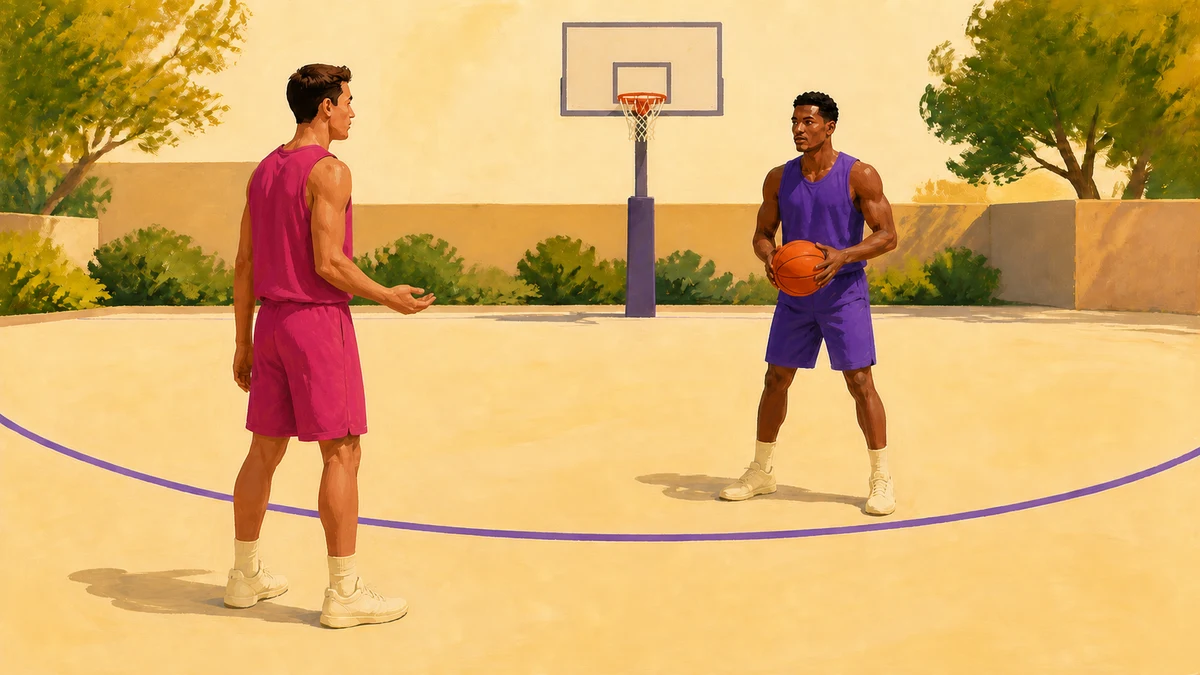
In FIBA 3x3, a check-ball resumes possession after a dead-ball situation: the defender exchanges the ball with the offensive player behind the arc at the top of the court. Clearing the ball is different. After a defensive rebound or steal, the new offense takes the live ball behind the arc by passing or dribbling; there is no automatic check-ball. Start with that distinction when deciding whether to wait for an exchange or continue the possession. FIBA Official 3x3 Basketball Rules, short version
The short-form rules define a player as behind the arc only when neither foot is on or inside its line. For a check-ball, the receiver therefore begins beyond the line rather than standing on it. Do not confuse the top-of-arc restart location with a five-on-five sideline throw-in. Our guide to out-of-bounds throw-ins covers that separate topic; the procedure here is the 3x3 exchange between opponents. guide to out-of-bounds throw-ins
A useful viewing question is: did the official stop play, or did possession change while the ball remained live? That question is a way to classify the sequence, not permission to ignore the referee. If an incident includes a foul, violation, or special penalty, follow the official’s decision about the restart. The examples below isolate ordinary situations so that a made basket, a defensive rebound, and an out-of-bounds stoppage are not treated as interchangeable events.
How to perform the exchange
FIBA’s official interpretations require the defender to deliver a normal bounce pass that the opponent can control. The defender is not supposed to hand the ball over, throw it out of reach, or swipe at it before the receiver gains control. The interpretations also describe approximately one metre between the two players. An official should not restart the game while that spacing is incorrect. Treat the exchange as a playable pass, not an opportunity to manufacture a loose ball. FIBA Official 3x3 Basketball Rules Interpretations, valid January 1, 2025
The receiving player is treated as someone catching the ball while standing with two feet on the floor. FIBA’s examples identify travelling when the receiver jumps sideways before taking control or begins a two-step progression before the exchange is complete. The ordinary footwork rules still matter after the check. Catching a check-ball does not create a special allowance to move the feet before starting a dribble.
USA Basketball’s officiating guide describes the next action directly: once the offense has clear possession following the exchange, the player may dribble, pass, or shoot. There is no extra pass requirement in that guidance. For an optional walk-through, have the two players take their positions, make one controlled exchange, and identify the next legal action aloud. This is a teaching example, not an official test or a prescribed number of practice repetitions. USA Basketball 3x3 Officiating Guide
When the clocks restart
The FIBA short-form rules say that the game clock restarts when the ball is at the offensive player’s disposal after the check-ball has been completed. Their shot-clock provision likewise refers to the ball being at the offense’s disposal following the exchange. A player waiting for the defender’s pass is not already spending the possession’s clock time simply because both teams are in position. Officials and table staff administer the timing; the players complete the exchange.
Not every check-ball automatically produces a new twelve-second allocation. In the FIBA interpretation where a defender first throws the ball out of reach and receives a delay warning, the check is repeated without resetting the shot clock; any elapsed time is corrected. That example is a reason to separate the restart procedure from the decision about the remaining clock. Look at what caused the stoppage instead of assuming that the word check means a fresh possession.
Substitutions need a dead ball and a stopped clock
The FIBA short-form rules permit a substitution while the ball is dead and the game clock is stopped, before a check-ball or free throw. The exchange takes place behind the endline and does not require prior notice to the officials or table officials. USA Basketball describes the player exchange as the incoming substitute tagging the outgoing player. Be ready for a legitimate substitution opportunity; do not step onto the court while the current possession is continuing.
A made basket is a common source of confusion. FIBA’s interpretations reject a substitution made after a successful field goal while the game clock is running, because the ball has not become dead. The same document permits a substitution between two free throws before the ball is handed to the shooter for the second attempt. The decision is tied to the ball and clock state, not merely to the fact that someone just scored or just attempted a free throw.
For contrast, the 2026 USA Basketball U.S. Open five-on-five rules tell a substitute to report to the scorer’s table and prohibit substitutions between attempts in a multiple-free-throw series. Those are provisions for that named competition, not a universal description of every five-on-five league. They illustrate why a player should check the actual rule set instead of importing a familiar bench routine into 3x3. Ask the event officials if a local or youth format uses published modifications. 2026 USA Basketball U.S. Open Championships Rules
Read these four game situations separately
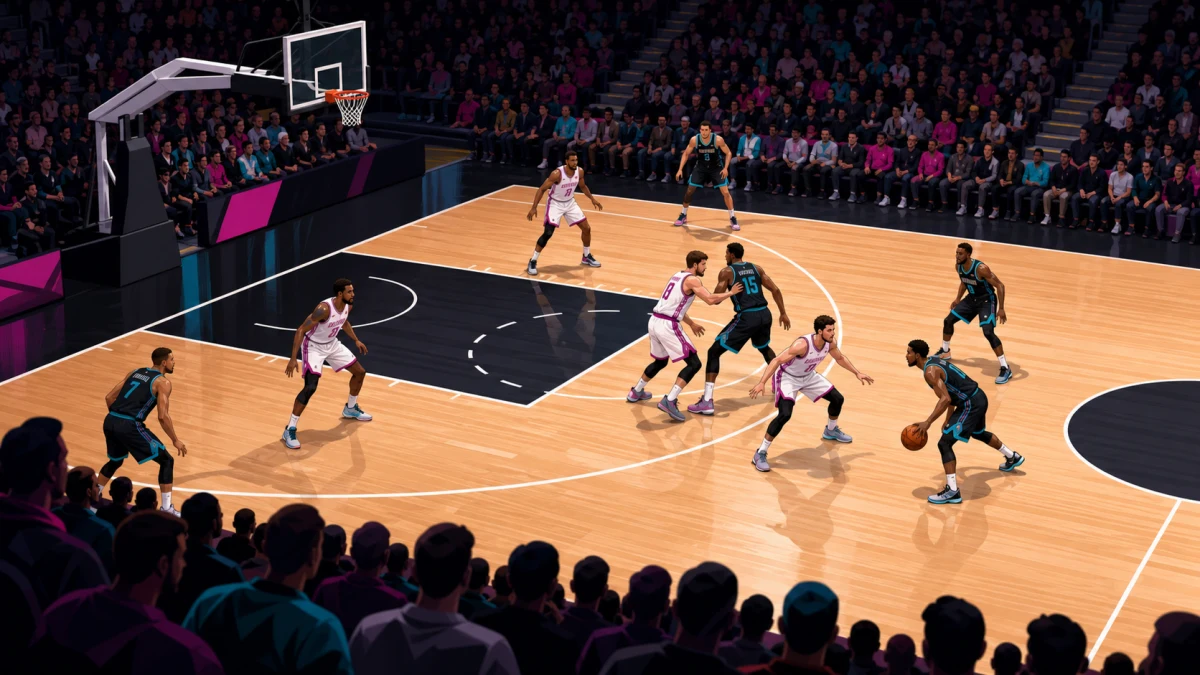
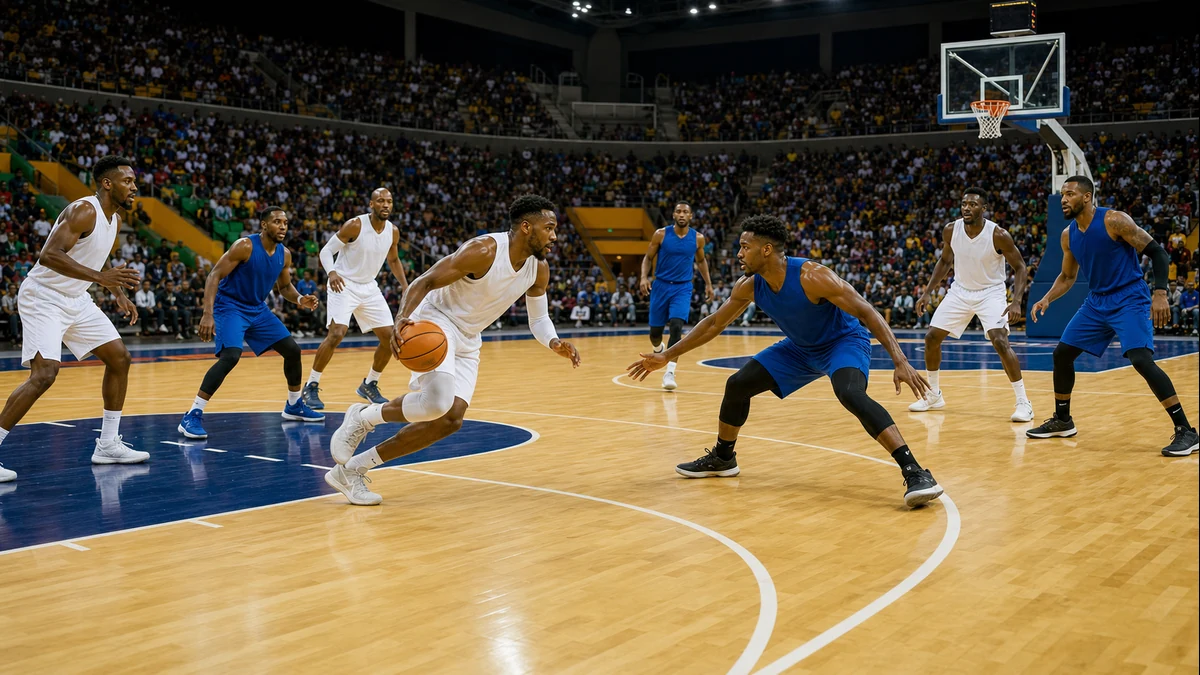
First, imagine the ball goes out of bounds and the official awards possession. The restart is a check-ball at the top of the arc. Second, imagine the defense takes a rebound and play continues without a whistle. The new offense clears the ball behind the arc rather than waiting for the opponent to check it. These examples deliberately leave out additional fouls and violations; add those circumstances and the official may have a different decision to administer.
Third, imagine a normal made basket. USA Basketball’s guide says the non-scoring team collects the ball under the basket and passes or dribbles it behind the arc; the ball does not become dead. Fourth, imagine a held-ball situation. FIBA’s short rules give the check-ball to the last defensive team with a twelve-second shot clock. That is not the same procedure as an alternating-possession arrow. Our held-ball and possession-arrow explanation discusses the broader comparison. held-ball and possession-arrow explanation
When watching a replay, you can pause at the change of possession and name what actually occurred: rebound, score, out-of-bounds decision, or held ball. Then identify the next restart or clearance from the applicable rule. Keep those observations separate from guesses about a player’s intention. For the tournament pathway rather than the possession mechanics, the FIBA 3x3 competition-system guide is the related starting point. FIBA 3x3 competition-system guide
Frequently asked questions
Can the receiver shoot immediately after a check-ball?
Yes. USA Basketball’s officiating guide allows the player to dribble, pass, or shoot once the offense has clear possession after the exchange. The check does not require another pass first, and it does not remove the normal footwork restrictions on the receiver.
Can a substitute enter after a normal made basket?
Not while the game continues with a live ball and a running clock. FIBA’s interpretation specifically rejects that substitution. Wait for a legal dead-ball, stopped-clock opportunity, such as before a check-ball or a free throw, and use the endline substitution procedure.
Does every check-ball reset the shot clock to twelve seconds?
No. The remaining time depends on the reason for the stoppage. FIBA’s delay-warning example repeats the check-ball without a reset and corrects time that elapsed. Keep the exchange procedure separate from the official’s decision about the shot clock.
Is clearing a defensive rebound the same as checking the ball?
No. When the defense rebounds and play remains live, the new offensive team takes the ball behind the arc by a pass or dribble. A check-ball is the opponent-to-opponent exchange used for a dead-ball restart at the top of the court.