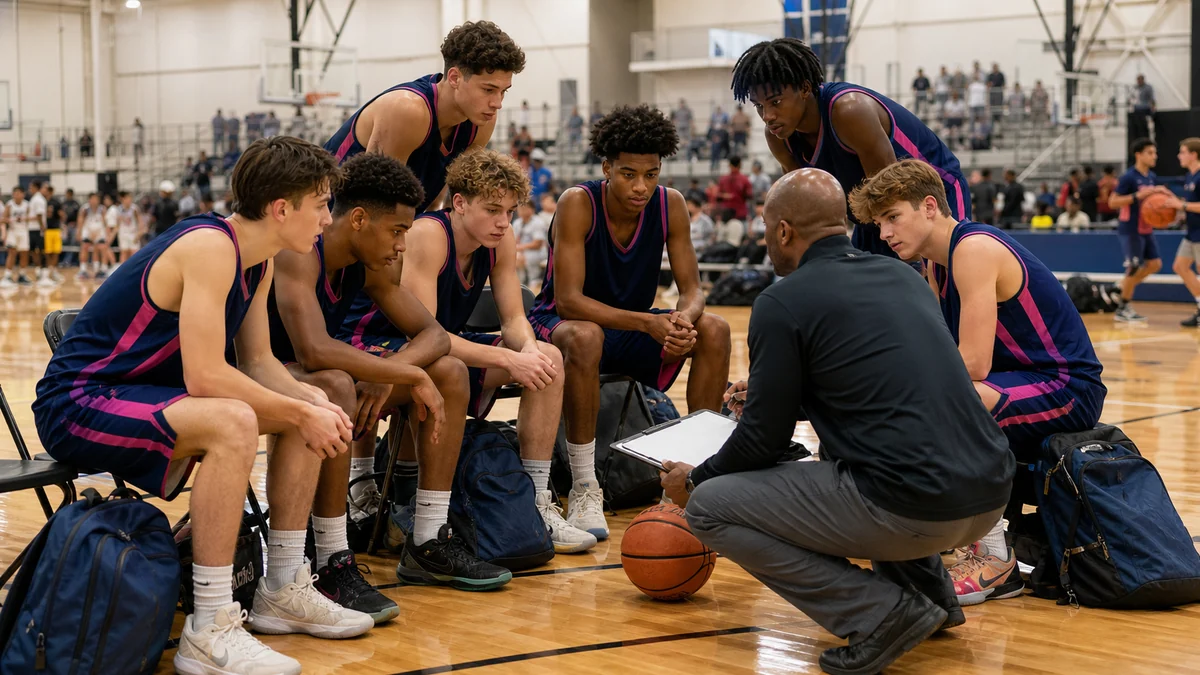


The short version: Choose a college basketball program by testing academic fit, total financial aid, support services, current roster facts, development resources, and compliance timelines in writing. Coaches can describe a current opportunity, but playing time, renewal, admission, and eligibility need their own verification. Keep one dated comparison for every school before making a decision.
Key takeaways
- Compare whole-school fit, not only a coach’s current role description.
- Ask financial-aid offices for the complete package, not only athletics aid.
- Separate current roster facts from projections about playing time and staff.
- Use compliance offices for recruiting and transfer-specific determinations.
- Keep dated written answers, conditions, and next owners for every school.
Choose a program by testing fit, not by collecting promises
A college basketball decision includes academics, financial aid, recruiting timing, support services, roster opportunity, and personal fit. None of those categories is settled by one coach conversation, one campus visit, or one social-media announcement. The NCAA’s recruiting guidance says recruiting looks different at every division and in every sport, and that academics are part of the decision. Build a comparison file for every school so the same questions receive the same level of evidence. NCAA Recruiting
Separate what the school has confirmed from what you hope will happen. A coach can describe a current roster, a development plan, or a recruiting need, but playing time, a future staff, and a future role are projections. Record the date, the person who gave the answer, the document or message that supports it, and the next person able to confirm it. This keeps a positive recruiting conversation from being mistaken for admission, aid, eligibility, or a fixed role. college basketball recruiting
Start with the academic and support environment
Begin with the academic question: can you see a realistic degree path at this institution? Ask for the major requirements, academic calendar, tutoring or counseling access, course-load expectations during season, and the person who helps student-athletes coordinate these pieces. NCAA core guarantees explicitly list academic counseling and support services. For a player considering a transfer, capture the academic questions in writing before the move becomes urgent, then take them to the appropriate campus offices. NCAA Student-Athlete Core Guarantees NCAA Transfer Rules and Eligibility
Ask about health and support with equal care. NCAA core guarantees include medical care for athletically related injuries, but the practical details belong to the individual school: who coordinates care, what support is available during recovery, and how academic accommodations work when a player cannot participate. Ask the relevant school office for the current written explanation rather than relying on a former player’s experience.
For players considering a move after enrolling, academic progress and athletic eligibility are linked. NCAA transfer guidance says transferring affects both, and it directs specific questions to the compliance office at the current or intended school. Treat the degree audit, credit questions, eligibility conversation, and timeline as separate deliverables before describing a destination as a better fit.
Compare the full financial picture
An athletics scholarship is financial aid awarded by a college or university in exchange for participating in a sport. It can cover tuition and fees, room and board, and course-related books, but the NCAA says most student-athletes receive partial aid rather than a full ride. That means the useful comparison is the entire cost and aid picture, not the biggest athletics number in a recruiting message. NCAA Scholarships and Financial Aid
Ask each financial-aid office for every category that may apply, not just the athletics award. The NCAA gives exactly that advice. Request a written breakdown of tuition, housing, meals, books, fees, academic aid, grants, loans, expected family contribution, and costs that the family still carries. Put the same columns in every school’s comparison so a smaller athletics offer is not evaluated without the academic or need-based aid beside it.
Ask the coach and aid office how long the award lasts, what renewal terms apply, and what written notice and appeal process exists if aid changes. The NCAA says coaches decide who receives an award, its amount, and yearly renewal; it also says scholarships are typically year-to-year and renewal is not guaranteed. A school planning to reduce or not renew a scholarship must give written notice, and the core-guarantees page identifies written notice and an appeal opportunity for reductions, cancellations, or nonrenewals. For the stated first-year and remaining-eligibility conditions, the core guarantees also bar aid changes for athletics-related reasons. official and unofficial recruiting visits
Ask basketball questions that expose assumptions
Use the current roster as context, not as a forecast. Ask which players are returning, which positions and roles the staff is recruiting, how the program defines a first-year development plan, and which staff member owns individual development. Then ask what could change: graduation, transfers, injuries, staff changes, and admission or eligibility outcomes. Do not ask a coach to guarantee minutes; ask for the current facts that let you judge the opportunity.
Communication has its own rule environment. The NCAA says recruiting calendars define when and how coaches may recruit and that rules vary by sport and division. Its guidance says coaches may contact prospective student-athletes through calls, texts, emails, or other approved methods depending on sport- and division-specific rules. Confirm the current calendar and sport-specific dates before treating contact frequency as a signal about interest or fit.
A campus visit should produce evidence, not just atmosphere. Ask the compliance, academic, financial-aid, athletic-training, and housing teams the questions that the coaching staff cannot finally answer. The NCAA says a campus visit, especially an expense-paid visit, may be part of the recruiting process. Take notes after each meeting and mark which answers are written, verbal, conditional, or still missing. email college basketball coaches
Make transfer risk visible before it becomes urgent
A strong program comparison also asks what happens if circumstances change. NCAA transfer guidance says the decision to transfer requires research and careful consideration of relevant rules and timelines. This does not mean a player should plan to leave. It means families should understand how credits, eligibility, aid, and academic progress would be evaluated before choosing a path that may be expensive or difficult to reverse.
If a transfer becomes real, do not rely on a coach’s informal estimate. The NCAA directs specific questions to the athletics compliance office at the current or intended school. Its published process says the Transfer Portal is the centralized database for student-athletes who intend to transfer and that a current school enters the player’s name after notification. Keep the transfer decision separate from the recruiting story: confirm degree progress, aid, timing, admission, and eligibility with the offices that own those decisions.
A final program-fit checklist
- Academics: Can the school show a workable degree path, academic counseling, and the campus office responsible for transfer-credit questions where relevant?
- Aid: What is covered, what is not, how long does it last, and which written renewal and appeal terms apply?
- Basketball: What current roster facts and development resources are documented, and which parts remain projections?
- Compliance: Which person at the school can answer recruiting-calendar and transfer-process questions in writing?
- Visit: What did the academic, aid, medical, housing, and coaching conversations each confirm or leave conditional?
Do not force a school to win every category. The point is to make tradeoffs visible enough to discuss honestly. A program may be a suitable academic fit with a less certain basketball role, or the clearest financial package may require a different campus or degree plan. A dated comparison protects the player from treating one exciting moment as an answer to every other question.
Frequently asked questions
Does a coach’s scholarship offer guarantee a full ride?
No. The NCAA says scholarships can cover tuition, fees, room, board, and course-related books, but most student-athletes receive partial aid. Ask the financial-aid office for the complete written aid picture and identify every cost not covered.
Who decides whether a scholarship is renewed?
The NCAA says coaches decide who receives a scholarship, its amount, and whether it is renewed each year. Scholarships are typically year-to-year and renewal is not guaranteed, so ask for the school’s current written terms before accepting an offer.
Who answers transfer eligibility questions?
The NCAA directs specific transfer questions to the athletics compliance office at the current school or the school you plan to attend. Its published process identifies the Transfer Portal as the centralized database for student-athletes intending to transfer and says the current school enters a player’s name after notification.