
The short version: NBA shot-clock rules connect possession, timely release and ring contact. Defensive touches do not automatically reset the clock; specified offensive recoveries receive 14 seconds.
Key takeaways
- NBA throw-ins start the countdown on a legal on-court touch.
- A defensive touch without possession leaves the NBA shot clock running.
- NBA Rule 7 requires release before expiration and subsequent ring contact.
- The NBA assigns 14 seconds to the specified offensive recoveries after misses.
- NBA replay can resolve certain foul-timing and shot-clock errors, subject to timing rules.
Which rules apply, and when does the countdown start?
Under NBA Rule 7, the shot clock counts down the time available for the team with the ball to attempt a field goal. Its starting value is 24 seconds unless the rule specifies otherwise. The display shows seconds, adding tenths when the countdown reaches 4.9 seconds. RULE NO. 7: Shot Clock | NBA Official shot clock counts down
FIBA states that its basketball rules differ slightly from NBA, WNBA and NCAA rules. The operational explanations here are specifically NBA rules; the reset values and review procedures below are identified with that competition. Official Basketball Rules | About FIBA
The NBA starts the countdown when a team gains a new possession with the ball in play. A throw-in has a specific trigger: a player must legally touch the ball on the court. Following a jump ball or a missed free throw, the trigger is obtaining new possession. Those situations have their own stated starting conditions.
Does a defensive touch end possession?
The NBA considers a team in possession while it holds, passes or dribbles the ball. Possession also continues when the ball is batted away and the opponent has not gained possession. A defensive touch by itself therefore leaves the countdown running; the defender touching the ball and the defender gaining possession are different conditions under this rule.
NBA Rule 7 identifies the ball hitting the offensive team's rim as an event that ends team possession. It separately addresses a defender being the last player to touch the ball before it goes out of bounds or enters the ring from below: the clock stops, the offense receives the ball, and only the unexpired time remains available.
What makes an attempt legal before expiration?
After gaining possession, an NBA team must attempt a field goal before its allotted time expires. Rule 7 specifies both release timing and subsequent ring contact for a legal attempt: the ball must leave the shooter's hand before expiration, then contact the basket ring. Getting the ball out of the hand addresses the release requirement; ring contact is a separate requirement.
The NBA states that a reading of zero establishes expiration even if the horn has not sounded. Its dead-ball provision calls a violation when the clock reads zero, except when the reason is a defensive three-second violation, kicking violation, punched-ball violation, personal foul or technical foul by the defensive team. Those exceptions belong to that specific dead-ball provision. defensive three-second violation
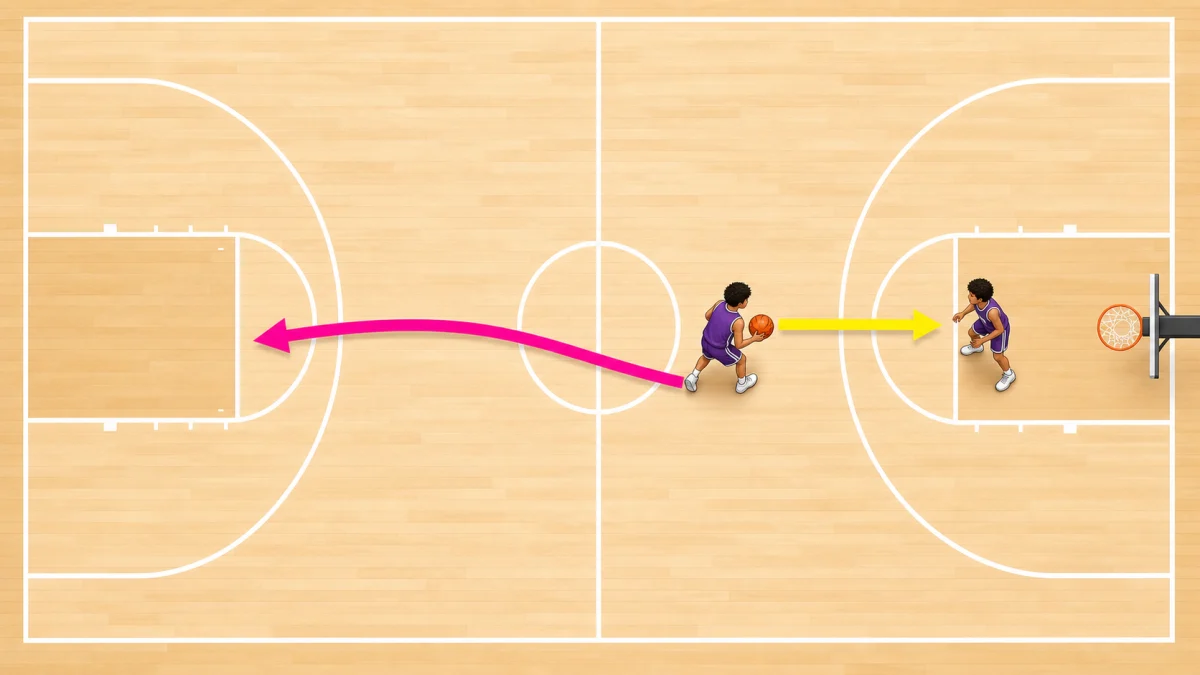
After an NBA shot-clock violation, the defensive team receives the ball for a sideline throw-in. The location is nearest to where play was suspended, subject to a boundary: it cannot be closer to the baseline than the free-throw line extended. sideline throw-in
The NBA also specifies outcomes when an official accidentally whistles and the shot-clock buzzer sounds with the ball airborne. If the shot misses the rim, a shot-clock violation has occurred. If the shot is successful, the basket counts and play resumes with the inbound that follows a made field goal.
When does the NBA reset to 24 or 14 seconds?
The NBA assigns a fresh 24 seconds when possession changes from one team to the other. There is a period-ending qualification: when 24 seconds or less remain in a period, the shot clock does not operate following a change of possession. That condition concerns the time left in the period and the possession change.
The NBA uses a 14-second reset when the offensive team is first to regain possession after either of two specified misses: an unsuccessful free throw that stays in play, or an unsuccessful field-goal attempt that touches the ring. The rule ties this reset to the offense obtaining possession after the qualifying miss.
Which other events leave the clock without a reset?
NBA Rule 7 also lists events that do not reset the shot clock. They include a technical foul or delay-of-game warning against the offensive team, a field-goal attempt that fails to touch the rim, and a jump ball resulting from a held ball caused by the defense. Each is expressly included among the rule's no-reset situations.
What can NBA replay resolve about shot-clock timing?
NBA replay rules permit review of whether a called foul, not committed on or by someone in the act of shooting, preceded shot-clock expiration. For the shooting-foul situation described in Rule 13, if the Replay Center Official determines that the foul occurred or the ball was released after expiration, the foul is overturned and a shot-clock violation is assessed. RULE NO. 13: Instant Replay | NBA Official
NBA replay can also resolve an incorrect shot clock involving whether the ball touched the rim. The correction restores the shot clock to the time associated with the offense obtaining possession after that contact or non-contact. Review is subject to timing rules: a shot-clock violation that was not reviewed within the prescribed timing cannot be reviewed later.
Frequently asked questions
Does a defender knocking the ball loose give the offense more time?
Under NBA rules, a defensive touch does not give the offense a fresh countdown when the defender fails to gain possession. The team remains in possession after the ball is batted away under that condition, and the shot clock continues running.
Is releasing the shot before zero enough?
Release before expiration satisfies one of the NBA's stated conditions for a legal attempt. Rule 7 also requires subsequent contact with the basket ring. An attempt that fails to touch the rim does not trigger a shot-clock reset.
Does an offensive rebound produce a full 24 seconds?
For the NBA situations covered here, the reset is 14 seconds. That applies when the offense first gains possession after a missed field goal that contacted the ring, or after an unsuccessful free throw that remains in play.
Must the horn sound for the clock to expire?
No. According to “RULE NO. 7: Shot Clock | NBA Official,” if the shot clock reads 0, a shot-clock violation has occurred even though the horn may not have sounded.
Can replay overturn a shooting foul because time expired?
Yes. In the NBA shooting-foul review situation described here, the Replay Center Official can determine that the foul occurred or the ball was released after shot-clock expiration. The resulting ruling overturns the called foul and assesses a shot-clock violation.