
The short version: In a short roll, the screener stops before reaching the rim—often around the free-throw-line area—receives from the ball handler, and plays from the middle of the defense. The catch commonly appears when two defenders commit to the ball. The roller must arrive balanced, see the rim and helpers, and choose among a finish, floater, kickout, cutter, or another two-player action. Teammate spacing creates the read; no single pass defeats every coverage.
Key takeaways
- The short-roll catch usually sits between the screen and the rim, often near the free-throw line rather than at the basket.
- Aggressive hedges and blitzes can create the passing window by committing both screen defenders to the ball handler.
- The roller reads the nearest helper, the rim, cutters, and perimeter spacing before choosing the next action.
- Weak-side movement must create a clear choice for help defenders without crowding the roller's decision space.
What is a short roll in basketball?
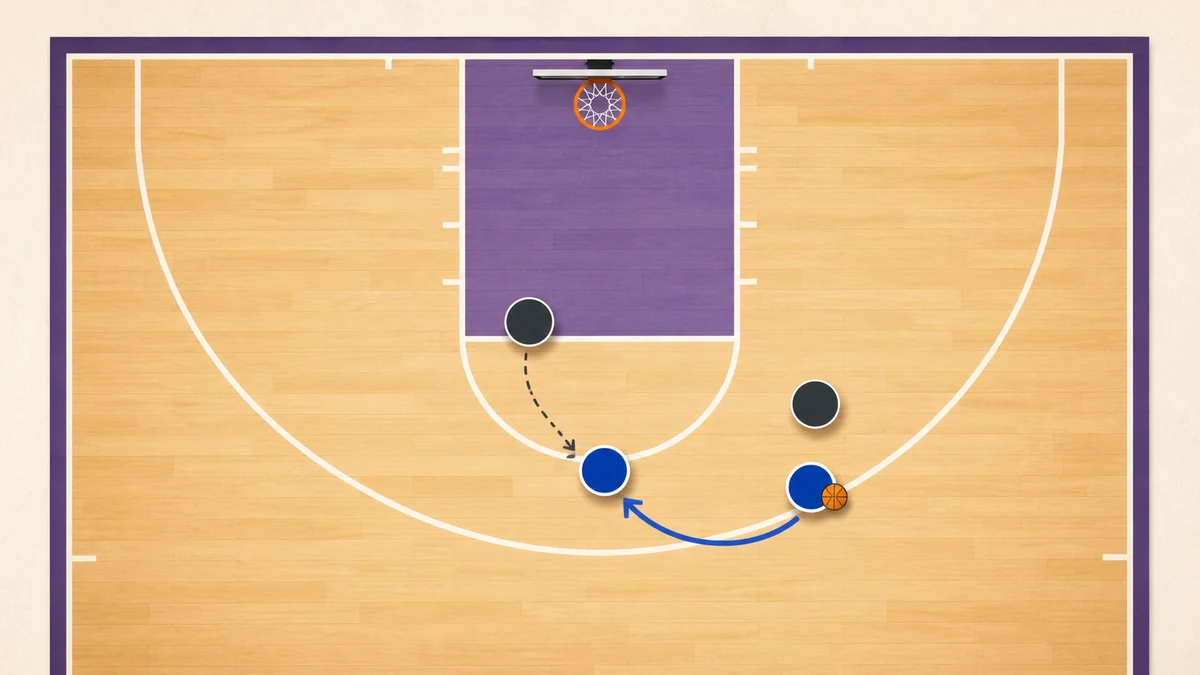
A short roll is an on-ball-screen action in which the screener releases from the screen but stops before reaching the rim, often around the free-throw-line area. The ball handler passes into that middle window, and the roller plays from there. FIBA's official terminology includes both parts of the idea: the shortened path and the responsibility to create a play for the roller or a teammate. FIBA Europe Basketball Terminology pick-and-roll coverages
The difference from a full roll is the location and timing of the catch. A full roller continues toward the rim and tries to receive behind or beside the defense. A short roller receives earlier, between the two screen defenders and the back line of help. That creates a valuable but temporary advantage: the roller can see the rim and several passes, while the defense is rotating from the perimeter and paint. FIBA Tactics Board: Previewing the Final FIBA Basketball Erasmus: The Short Roll
Why aggressive coverage opens the short roll
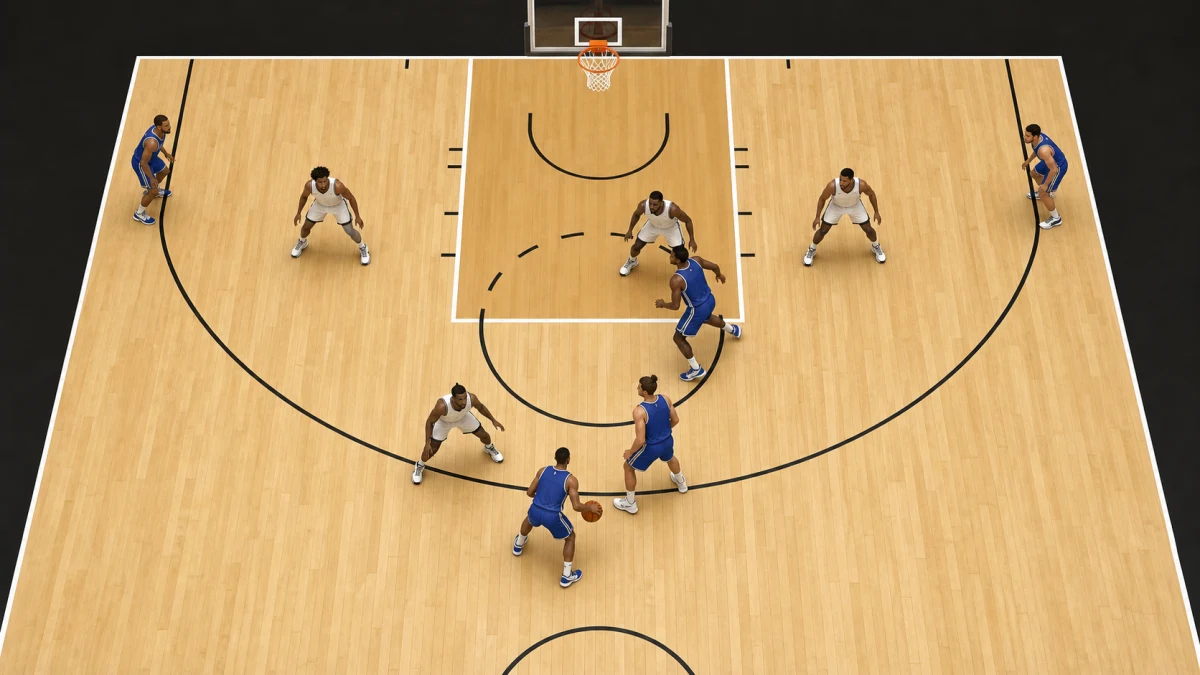
The short roll commonly appears when the on-ball defender and the screener's defender both move toward the ball handler. In a hard hedge or blitz, the defense tries to stop the handler from turning the corner or making an easy pull-up. FIBA film analysis repeatedly shows the tradeoff: two defenders near the ball can leave the screener available behind them, producing a short-roll pass and a potential numbers advantage farther from the ball. FIBA Tactics Board: Hapoel Holon Shake, Rattle, and Roll
The window does not stay open for long. The ball handler needs a passing lane around, between, or away from the two defenders, and the roller must leave the screen at the right moment. Release too early and the screen may not occupy the defense. Release too late and the handler may be trapped while the low defenders move into the lane. The useful pass arrives before the back line finishes its rotation.
Where and how the roller should catch
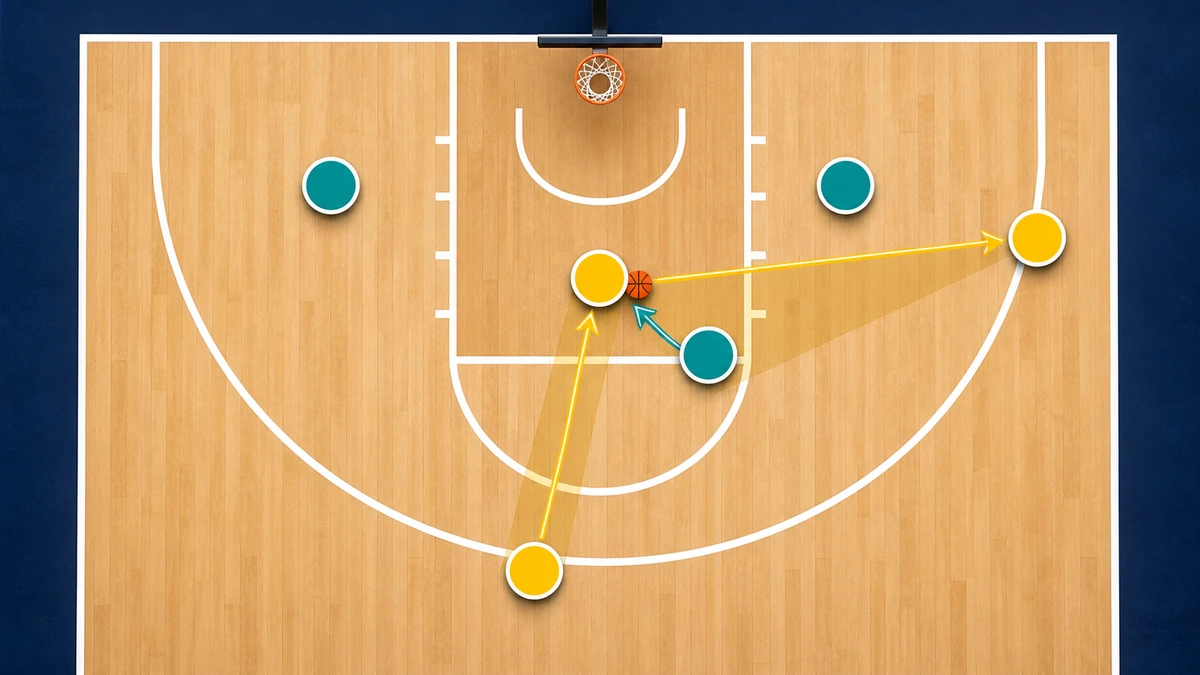
The target area is often near the free-throw line, but it is a window rather than a fixed dot. The exact catch shifts with the screen angle, starting location, coverage, and passing lane. The roller should arrive with hands visible, catch on balance, and avoid drifting so deep that the nearest helper can guard both the ball and the rim. A controlled stop gives the roller time to pivot, take one dribble, pass, or flow into another action. FIBA Breaking the Mold: Jerusalem Offense
- See the rim first so an uncontested finish or short shot remains a real threat.
- Find the closest helper next, because that defender's commitment usually reveals the first pass.
- Keep both sides in view instead of turning the shoulders fully toward the first visible teammate.
- Use a pivot or one controlled dribble only when it improves the angle without shrinking the passing windows.
Read the helper: finish, cutter, or kickout
If no defender steps into the lane, the roller can attack the rim or use a controlled short finish that fits the distance. If the low defender commits, the roller looks behind or beside that rotation. FIBA's Holon example shows a corner defender forced toward the roller, opening the corner pass. Its Jerusalem analysis shows a cutter moving before the catch so the helper must choose between two threats. The open player is produced by the rotation, not by a memorized pass. FIBA Hapoel Jerusalem: Post to Post offensive spacing
A perimeter defender may stunt at the roller and recover rather than fully commit. That is why the roller should hold the ball long enough to read but not freeze the possession. A short fake can expose the recoverer's direction. The next action might be a kickout, a pass to a cutter, a finish, or even a handoff at the free-throw line. FIBA has documented short-roll catches flowing directly into another handoff or ball-screen action.
How all five players create the read
The ball-screen pair starts the action, but the three off-ball players determine how many defenders can crowd the catch. A corner shooter can hold width and lengthen a help rotation. A player on the opposite lane line can lift, cut, or exchange to move the tagging defender. FIBA's Le Mans example placed options on both sides of the roller; its Holon example manipulated which perimeter defender was responsible for stopping the middle catch.
Movement must clarify the help decision rather than create traffic. A cutter who moves before the catch can pull or occupy the low defender, but two teammates cutting into the same lane can erase the roller's view. A shooter who lifts too early may shorten the helper's recovery. Teams can use different rules, but every rule should answer the same questions: who is stretching the tag, who is available behind the rotation, and where is the next safe pass if the lane closes?
A four-stage short-roll teaching progression
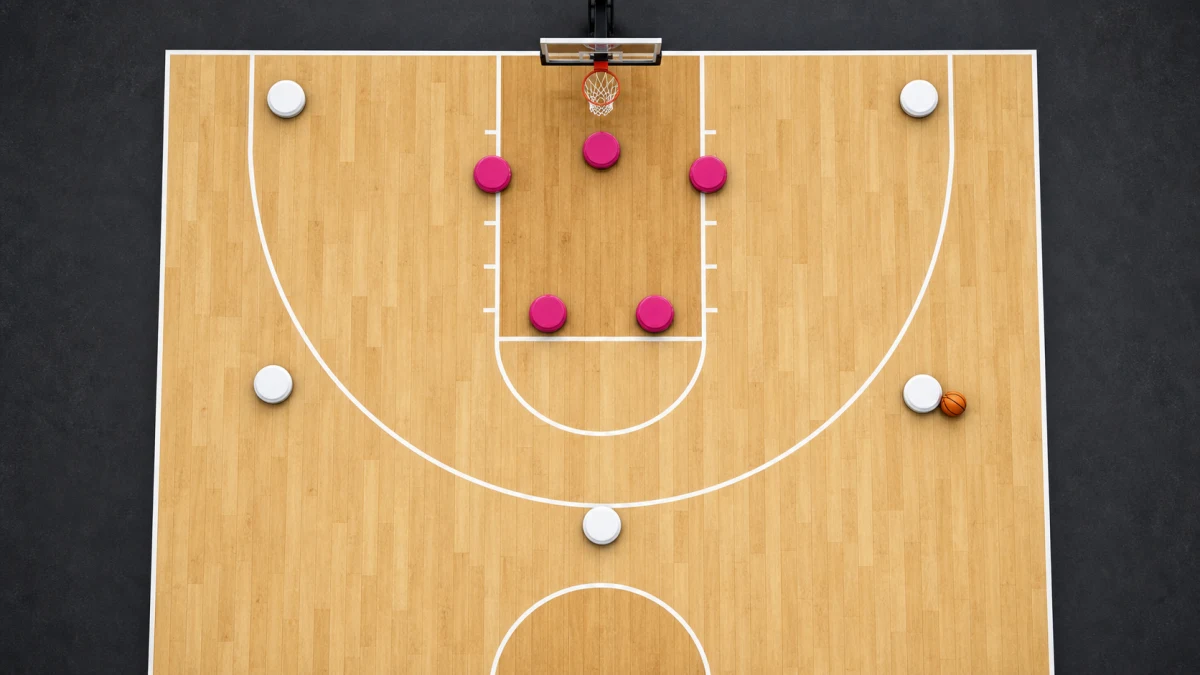
- Catch and scan: pass to the screener near the free-throw line, require a balanced stop, a rim look, and a pivot that keeps both corners visible.
- One-helper read: place a defender at the rim who either stays home or steps up; the roller finishes when open and passes behind a full commitment.
- Two-side outlets: add a strong-side cutter and a weak-side shooter so the roller must keep the floor open and identify which helper moved.
- Live coverage: play the full ball screen with the defense allowed to hedge, blitz, switch, or recover; reward a paint touch or advantage pass rather than only the final basket.
Pause the first live repetitions at the catch and ask the roller to name the nearest helper and the available outlets. Then restart from that picture. This keeps the teaching point on vision and spacing instead of turning the drill into a race for a shot. As recognition improves, remove the pause and vary the coverage. The short roll becomes transferable when the player can identify why the window opened and what the defense gave up behind it. basketball workouts
Common short-roll mistakes on film
- Roller runs through the window: the catch becomes too deep or disappears before the handler can pass.
- Handler waits for a perfect lane: the hedge recovers and the numbers advantage vanishes.
- Roller predetermines the corner pass: a stunt can bait the ball outside while the rim remains open.
- Off-ball players crowd the middle: one defender can guard the roller and two passing targets from the same area.
Judge the possession at the moment of the short-roll catch, not only by whether the final shot went in. Was the roller balanced? Did the handler deliver before recovery? Did off-ball spacing force a real defensive choice? Did the roller see the nearest helper and preserve a second option? A correct read can still lead to a missed shot, and a poor read can survive because of a difficult make. Film study should separate the decision from the outcome.
Frequently asked questions
Where does a short roller usually catch the ball?
Often near the free-throw-line area, but the exact window changes with the screen angle, coverage, and passing lane. The defining feature is receiving before the full roll reaches the rim.
Does a short roll only work against a blitz?
No. Aggressive hedges and blitzes commonly open the window, but teams can also use a short-roll catch against other coverages when the spacing and passing angle support it. The next read changes with the defense.
Must the short roller be a center?
No. The action requires a screener who can catch, stop under control, see rotating defenders, and pass or finish. Personnel and team design decide who fills that role. Guards, wings, and forwards can fill it when the action and spacing support them.