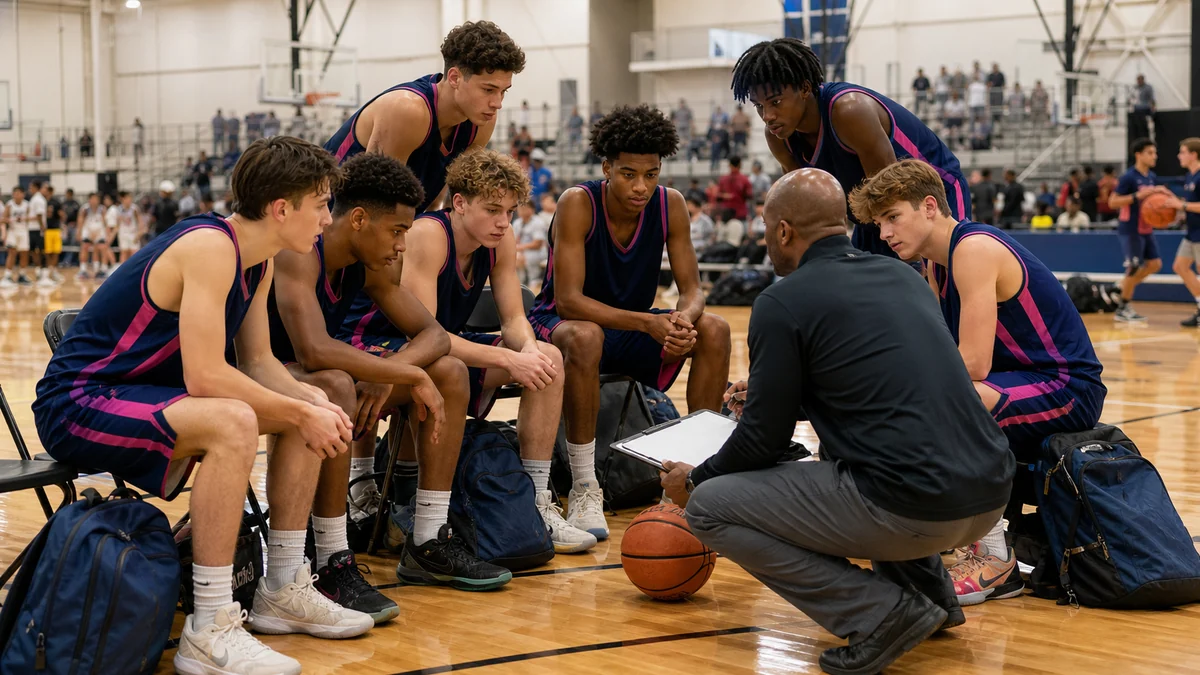


The short version: Start with the current compliance office and confirm the division-specific contact process before recruiting conversations. Ask the destination compliance and academic offices to evaluate prior eligibility, degree progress, and transferable credits. Keep admission, roster status, playing role, and financial aid as separate decisions. Preserve written answers, owners, conditions, and deadlines, and do not treat Portal entry or coach interest as a guarantee.
Key takeaways
- Confirm the current division-specific contact process before acting.
- Have the destination compliance office evaluate eligibility.
- Compare degree progress, not only total accepted credits.
- Separate roster terms, admission, and every form of aid.
- Keep dated written answers, conditions, owners, and deadlines.
Start with the process, not a promise
A college basketball transfer decision combines eligibility, academics, admission, roster fit, financial aid, housing, and personal priorities. The NCAA Transfer Portal is a process tool inside that decision, not a promise of recruitment or a roster place. NCAA guidance says the athlete begins by notifying the current school, which then enters the athlete in the Portal. Before starting, write down the reasons for considering a transfer and the facts that would make a new school a better academic and basketball fit. NCAA Transfer Rules and Eligibility
Treat every answer as date- and division-specific. Contact rules, notification procedures, academic requirements, and institutional policies can differ. NCAA guidance states that Division I athletes must be in the Portal before contacting another school, while Divisions II and III use different permission-to-contact procedures. Ask the current compliance office which rule applies before sending messages, accepting recruiting calls, or interpreting advice written for another division. NCAA basketball transfer portal
Build a small decision team before the first deadline. Include the athlete, a trusted family member or adviser, the current school compliance contact, the academic adviser, and the prospective school's compliance office when appropriate. Coaches can discuss basketball fit, but compliance staff should answer eligibility questions. The NCAA specifically directs transfer athletes to the compliance office at the school they plan to attend for requirement questions.
Questions to ask before Portal entry
Ask the current compliance office: What notification method does this school require? When will my name be entered? Which transfer window or exception applies to my sport and division? May I contact another school now? What documentation will I receive after entry? Do not rely on a screenshot from another athlete or a social post about a different season. Request the current answer, the date, and the office responsible for it.
Ask the academic adviser for an unofficial transcript, a degree audit, the list of courses in progress, and the declared-program requirements. Record which classes are complete, which are repeated or incomplete, and which credits may depend on institutional evaluation. This file does not determine transfer eligibility by itself, but it gives the new institution a cleaner starting point and lets the athlete compare degree progress rather than counting only total credits. NCAA Division I Academics
Ask the coaching staff what information may be shared and when. Separate a request for basketball feedback from a request for an eligibility ruling. Current Division I rules also address so-called ghost transfers: schools may not sign, roster, or involve a transfer in athletics before Portal entry. A conversation that skips the required process can create risk for both the athlete and the recruiting school, so confirm the permitted sequence before acting. Division I Cabinet adopts rules addressing ghost transfers
Academic questions for the destination school
Send the prospective school enough academic information to answer specific questions. Ask: Which completed credits apply to the intended degree? Which count only as electives? How many semesters remain under a realistic course load? Which major prerequisites are missing? Are summer or intersession courses necessary? A school can admit a student without every course applying cleanly to the chosen degree, so the useful comparison is progress inside the new program, not simply credits accepted by the university.
For a Division I four-year transfer, ask whether the athlete was academically eligible at the prior institution and how the new institution will apply progress-toward-degree rules. NCAA Division I guidance says prior academic eligibility affects immediate competition and athletics aid during the first year at the new institution. The same guidance lists six credits per term, annual-credit expectations, degree-progress benchmarks, and GPA standards tied to the institution's graduation rules. academic planning for basketball
Request a written explanation from the destination compliance and academic offices when the plan depends on an exception, waiver, or unusual credit evaluation. Ask what evidence is required, who files it, and whether the answer is final or preliminary. Avoid treating a coach's confident estimate as the institutional determination. The NCAA's public guidance points transfer questions to the compliance office at the school the athlete plans to attend.
Roster, role, admission, and aid are separate questions
Ask the basketball staff for concrete roster context: Which positions and roles are open? How many returning players occupy them? Is the invitation to visit, to apply, to join summer activity, to walk on, or to receive a roster commitment? Who makes the final roster decision, and when? A useful answer describes the current opportunity and the next decision point without guaranteeing playing time or a permanent role. roster limits and scholarships
Ask admissions whether the athlete has applied, been admitted, or is only being recruited. Confirm application deadlines, required records, deposit timing, housing steps, and orientation requirements. NCAA eligibility and institutional admission are different gates. A school can be interested in the player while the admission file is incomplete, and an admission decision does not by itself settle athletic eligibility or roster status. NCAA Eligibility Center
Ask the financial-aid office and athletics department to identify each part of the package in writing. Separate athletics aid, academic aid, need-based aid, grants, loans, housing, meal costs, fees, and any conditions for renewal. Compare the full annual cost and degree timeline, not one headline number. If the athlete is asked to sign or join activity, confirm Portal status first; current Division I ghost-transfer rules explicitly connect those actions to proper Portal entry.
Keep a dated transfer decision record
Create one table with school, contact, role, date, answer, source document, next action, and deadline. Use it for compliance, academics, admission, basketball, aid, and housing. After an important call, send a short factual follow-up: this is what I understood; please correct anything inaccurate. That habit exposes conflicting answers early and gives the athlete a clear list of questions still awaiting an authorized response. email college basketball coaches
Preserve the current transcript, degree audit, Portal confirmation, admissions messages, written aid documents, and any compliance determination. Do not post private records publicly or send them to accounts that have not been verified. Keep the final comparison focused on facts the athlete can confirm: degree path, expected remaining terms, eligibility status, roster terms, cost, support services, location, and the personal reason for transferring.
Set a decision date that leaves time for admission, credit evaluation, housing, and enrollment steps. A rushed verbal yes can leave the most consequential questions unresolved. If a rule or answer changes, update the record rather than editing the old entry away. The date trail matters because NCAA and institutional procedures can change, and different athletes may be operating under different divisions or transition rules.
A pre-commitment question checklist
- Compliance: Am I properly entered or cleared for contact, and which written rule or determination governs my eligibility?
- Academics: Which credits apply to my intended degree, how many terms remain, and have progress-toward-degree requirements been checked?
- Basketball: What exact roster status and role are being discussed, who decides, and what is the next confirmed milestone?
- Admission: Is my application complete, has a decision been issued, and which deposits, records, and deadlines remain?
- Cost: What written aid is offered, what is not covered, and which conditions apply to renewal?
- Operations: Are housing, enrollment, orientation, medical, and team-arrival requirements documented with owners and dates?
Do not close the checklist because one person says everything is handled. Close each item when the responsible office has answered it and the athlete understands the remaining uncertainty. If admission, eligibility, aid, or roster status is still conditional, label it conditional. That wording is not pessimistic; it keeps the decision accurate enough to compare with another option.
Frequently asked questions
Does entering the Transfer Portal guarantee recruitment?
No. Portal entry records transfer intent and enables the applicable contact process; it does not guarantee coach contact, admission, eligibility, financial aid, playing time, or a roster place. Keep those as separate questions with separate owners and written evidence.
Who should answer whether I can compete immediately?
The compliance office at the NCAA school you plan to attend should evaluate the applicable requirements. Provide complete academic and participation information, ask whether the answer is preliminary or final, and request the next required document or action.
Can a Division I school put me on the roster before Portal entry?
Current NCAA Division I rules prohibit signing or rostering an athlete who is not in the Portal and prohibit athletics activity before Portal entry. Confirm your own status and timing with compliance before treating any invitation as cleared.