

The short version: Understand the training-to-competition ratios recommended by USA Basketball and how to design practice tasks that resemble competitive demands.
Key takeaways
- Basketball movements like cutting and decelerating carry a higher physical cost than straight-line running.
- USA Basketball recommends specific training-to-competition ratios across different player development stages.
- Practice tasks should resemble competitive demands so players learn to recognize key sources of information in competitive environments.
- Expert skills are characterized as energy efficient, highly consistent, and extremely adaptable under pressure.
- Fatigue often stems from a mismatch between practice design and the multi-directional demands of actual games.
The Physical Demands of Basketball Movements
Basketball is characterized by unique physical demands. Basketball movements like accelerating, decelerating, cutting, landing, and re-accelerating carry a higher physical cost than straight-line running and are highly likely to cause heavy legs. When designing conditioning programs, understanding these demands is helpful for planning basketball training. Managing Basketball Training Load and Fatigue on… | KINEXON SPORTS
Fatigue often stems from a mismatch between what players experience in practice and what the game demands from their bodies. When structuring training, coaches can consider these demands to help players prepare for competition.
Defining Basketball Training and Competition
To build a practice plan, coaches can distinguish between training and competition. USA Basketball defines training to include all activity related to a player's technical skill development. Conversely, USA Basketball defines competition as the act of competing against another team, or imparting team strategies to prepare to compete against another team. Separating these concepts can help coaches organize their practice sessions. USA Basketball Player Development Curriculum - USA Basketball
Within the training framework, skill development must be comprehensive and structured. USA Basketball separates skills into eight categories: Ball Handling & Dribbling, Footwork & Body Control, Passing & Receiving, Rebounding, Screening, Shooting, Team Defensive Concepts, and Team Offensive Concepts. Each of these eight categories requires specific physical and cognitive demands that must be trained systematically. When coaches organize their practices, they must ensure that each of these skill categories is developed with high movement quality. Introducing heavy fatigue too early in the session can degrade the execution of these fundamental skills. Therefore, coaches must sequence these eight categories carefully to maintain high technical standards across all areas of player development.
USA Basketball Stage-Specific Training Ratios
Player development requires different training-to-competition ratios depending on the player's age and developmental stage. For Stage 3, which includes players from 8 to 12 years old, USA Basketball recommends a 70:30 training-to-competition ratio, with 5-on-5 play delayed until later in the phase. This high ratio of training ensures that young players focus primarily on fundamental skill acquisition. As an adaptable Level Up editorial dosage starting point, a coach training Stage 3 players might schedule 70 minutes of technical skill development for every 30 minutes of competition. This structured approach allows young athletes to build overall sports skills and master basic basketball-specific movements before they are exposed to the high physical and cognitive fatigue of full-court 5-on-5 competition.
As players mature, the training-to-competition ratios adjust to meet their changing physiological and skill needs. For Stage 4, which includes players from 12 to 15 years old, USA Basketball recommends a 60:40 training-to-competition ratio to build the aerobic base, build strength, and consolidate basketball skills. For Stage 5, which includes players from 14 to 17 years old, USA Basketball recommends a 50:50 training-to-competition ratio to optimize fitness preparation and individual/position-specific skills. As an adaptable Level Up editorial dosage starting point, a coach might use a 60:40 ratio for 13-year-olds and a 50:50 ratio for 16-year-olds. These stage-specific ratios ensure that fitness preparation and skill consolidation are balanced appropriately as players progress through their development.
Structuring Practice Tasks for Game Realism
Conditioning should not be isolated from the actual context of the game. It is important to use practice tasks that resemble the demands of competition so that players learn to recognize and understand key sources of information that exist in typical competitive environments. Traditional conditioning drills, such as baseline-to-baseline running, fail to provide these critical sources of information. By designing practice tasks that mimic the physical and cognitive demands of competition, coaches can train fitness and decision-making simultaneously. This approach ensures that players do not just build cardiovascular endurance, but also learn how to navigate the complex, rapidly changing environments they will face during real competitive games. WABC Coaching Manual Level 2 English
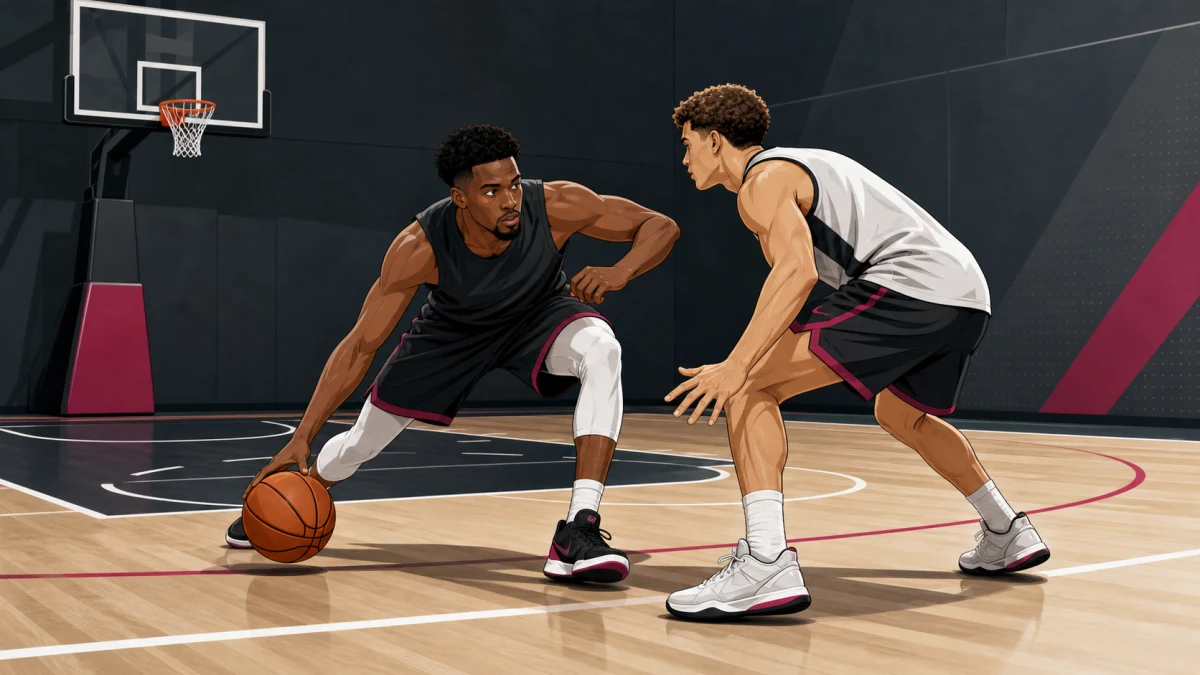
To make practice tasks truly effective, they must incorporate the visual cues that players rely on during a game. Experienced players use visual-perceptual information, such as teammate locations or defender foot positions, to predict play and determine the best course of action. When conditioning drills lack these visual cues, players cannot practice the decision-making processes required in competition. By integrating defenders and teammates into conditioning tasks, coaches force players to process visual-perceptual information under physical stress. This integration teaches players to make accurate predictions and select the best course of action even when they are fatigued, bridging the gap between physical fitness and game-specific execution.
Maintaining Skill Quality Under Pressure
The ultimate goal of basketball training is to develop skills that remain highly functional during intense gameplay. Expert skills are characterized as being energy efficient, highly consistent, and extremely adaptable. When a player possesses expert skills, they can execute complex movements with minimal wasted energy, maintain consistent form, and adapt to changing defensive situations. If conditioning is poorly sequenced, fatigue can degrade these motor patterns, leading to inefficient and inconsistent movements. Therefore, coaches must structure practices to protect these expert characteristics. By performing high-intensity skill work when the neuromuscular system is fresh, players can consolidate these energy-efficient and highly consistent motor patterns before fatigue is introduced.
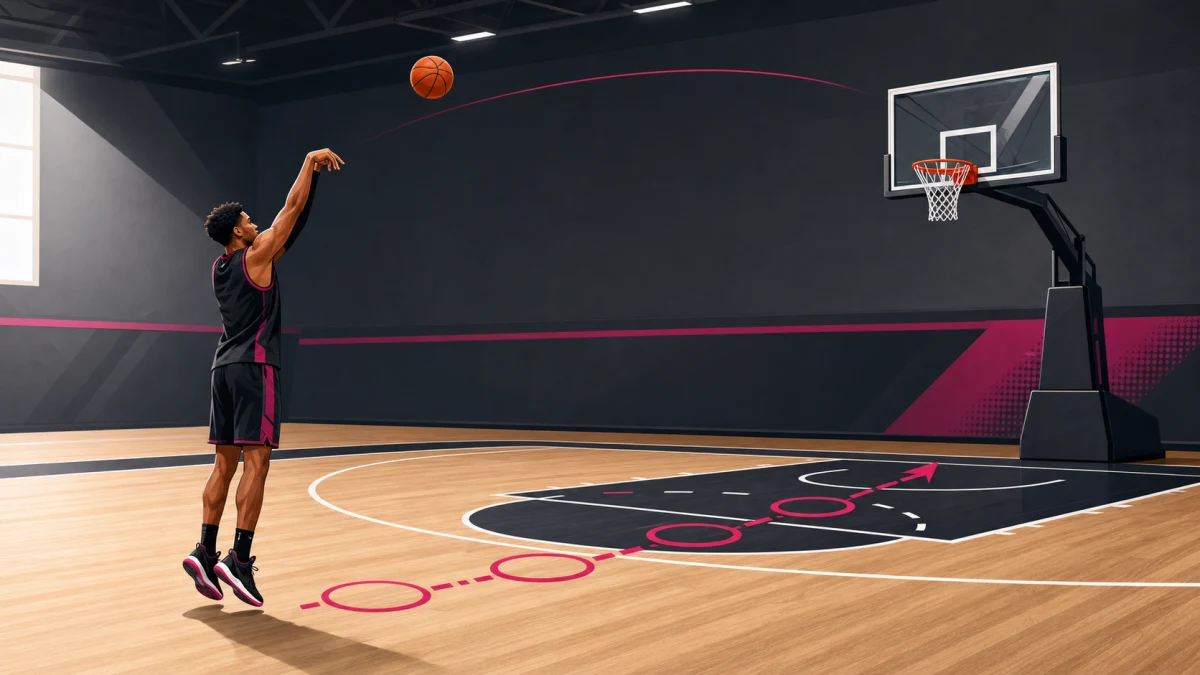
Once fundamental motor patterns are established, players must learn to maintain them under defensive pressure. A basketball player who can maintain shooting accuracy under varying intensities of defensive pressure is likely to be better able to cope with the demands of most game scenarios, including those experienced in higher level competitions. This ability to maintain shooting accuracy under pressure is a hallmark of elite performance. Rather than training shooting in a completely fatigue-free vacuum, coaches should gradually introduce defensive pressure and physical load. This progressive exposure helps players adapt their shooting mechanics to the physical and mental demands of high-level competition, ensuring their skills do not break down when the game is on the line.
What this means for players and coaches
For players and coaches, the integration of sports science and structured sequencing is essential for maximizing development. To monitor these training loads accurately, professional teams often utilize advanced tracking technology. KINEXON claims that its PERFORM IMU and PERFORM LPS tracking solutions inform coaches about the intensity of peak periods, density of high-stress movements, and individual workload accumulation. This technology allows coaches to see exactly how much physical stress a player absorbs during different parts of a practice session. By understanding the density of high-stress movements and individual workload accumulation, coaches can make precise adjustments to their practice plans. This data-driven approach helps ensure that conditioning is built systematically without overloading players or degrading their skill quality.
Even without advanced technology, coaches can apply these principles by carefully sequencing their practices to prevent fatigue. Fatigue often stems from a mismatch between what players experience in practice and what the game demands from their bodies. This careful sequencing is crucial because basketball movements like accelerating, decelerating, cutting, landing, and re-accelerating carry a higher physical cost than straight-line running and are highly likely to cause heavy legs. By placing high-fatigue tasks late in the session, coaches can protect early skill work from the heavy legs caused by these high-cost movements. This ensures that players build conditioning while maintaining the precise mechanics required for expert skill execution.
Limitations and Individual Variance in Conditioning
While advanced tracking solutions provide valuable data, they present clear limitations for most basketball programs. KINEXON claims that its PERFORM IMU and PERFORM LPS tracking solutions inform coaches about the intensity of peak periods, density of high-stress movements, and individual workload accumulation, but youth and high school coaches must rely on practical, subjective measures like session-RPE (sRPE) and visual movement quality. Over-indexing on technology is a common risk when these advanced tools are unavailable. Coaches must learn to use subjective observations to monitor mechanical load and fatigue. By watching for signs of heavy legs and degraded movement quality, coaches can make real-time adjustments to protect player safety and skill development without relying on expensive tracking systems.
Another major limitation is individual recovery variance and cultural coaching bias. Since basketball movements like accelerating, decelerating, cutting, landing, and re-accelerating carry a higher physical cost than straight-line running and are highly likely to cause heavy legs, the same conditioning drill will elicit vastly different fatigue responses across a single roster due to biological age, training history, and sleep or nutrition status. Furthermore, the traditional 'No Pain, No Gain' coaching bias often leads coaches and parents to equate extreme exhaustion with a good workout. This cultural bias makes the scientific sequencing of skill-before-fatigue a tough sell, even though fatigue often stems from a mismatch between what players experience in practice and what the game demands.
Frequently asked questions
How can basketball players improve conditioning without losing technique?
Conditioning should preserve the movement and decision quality the drill is meant to train. Coaches can control work periods, rest, space, and complexity, then stop or adjust the task when fatigue changes footwork, balance, ball control, or decision-making.
Should every basketball drill also be a conditioning drill?
No. Some sessions need low-fatigue technical work, while others combine skills with repeated game-like efforts. Turning every drill into conditioning can reduce the quality of learning, especially when players are still building a movement or decision pattern.
What is a useful sign that conditioning volume is too high?
A practical warning is a consistent drop in the technique or decisions the session is designed to improve. When players can no longer maintain posture, timing, spacing, or control, extra repetitions may train compensation rather than the intended basketball skill.