
The short version: Player tracking technology is transforming basketball, but its value depends on your ability to separate direct physical measurements from algorithmic estimations. By understanding the biomechanical limits of optical, IMU, and LPS systems—and aligning them with validated standards like FIBA's approval program—coaches and analysts can move past vendor hype to build objective, injury-resilient, and skill-focused development pipelines.
Key takeaways
- Direct vs. Estimated Data: Wearables directly measure acceleration and local positions, whereas optical systems estimate skeletal joints through computer vision.
- FIBA Validation Standards: FIBA's rigorous testing ensures that approved tracking technologies meet strict safety and accuracy benchmarks for official competition.
- Workload Balance: Effective injury prevention requires balancing external workloads (like jump counts) with internal physiological stress (like heart rate).
- Skill Integration: Smart balls and computer vision connect physical exertion to technical execution, revealing how fatigue degrades shooting mechanics.
The Landscape of Basketball Tracking Technologies
Modern basketball programs are flooded with data, but not all data is created equal. To make informed investments, coaches and analysts must understand the fundamental differences in how tracking systems collect information. The three primary technologies dominating the market are Optical Tracking, Local Positioning Systems (LPS), and Inertial Measurement Units (IMUs).
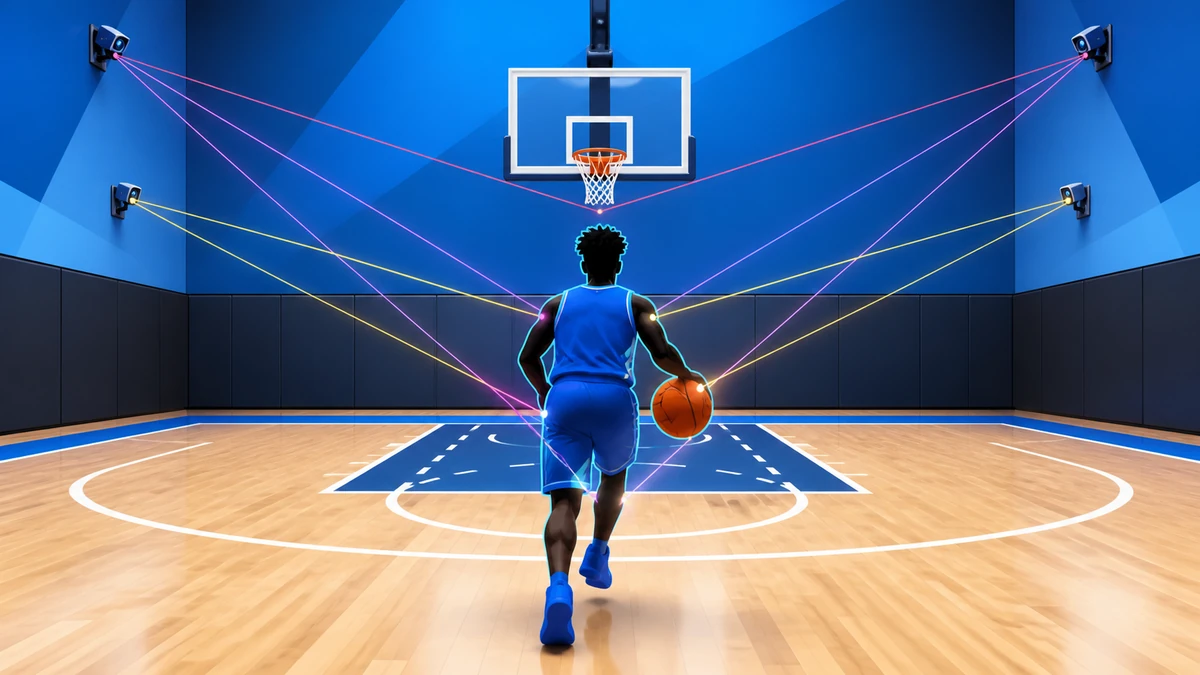
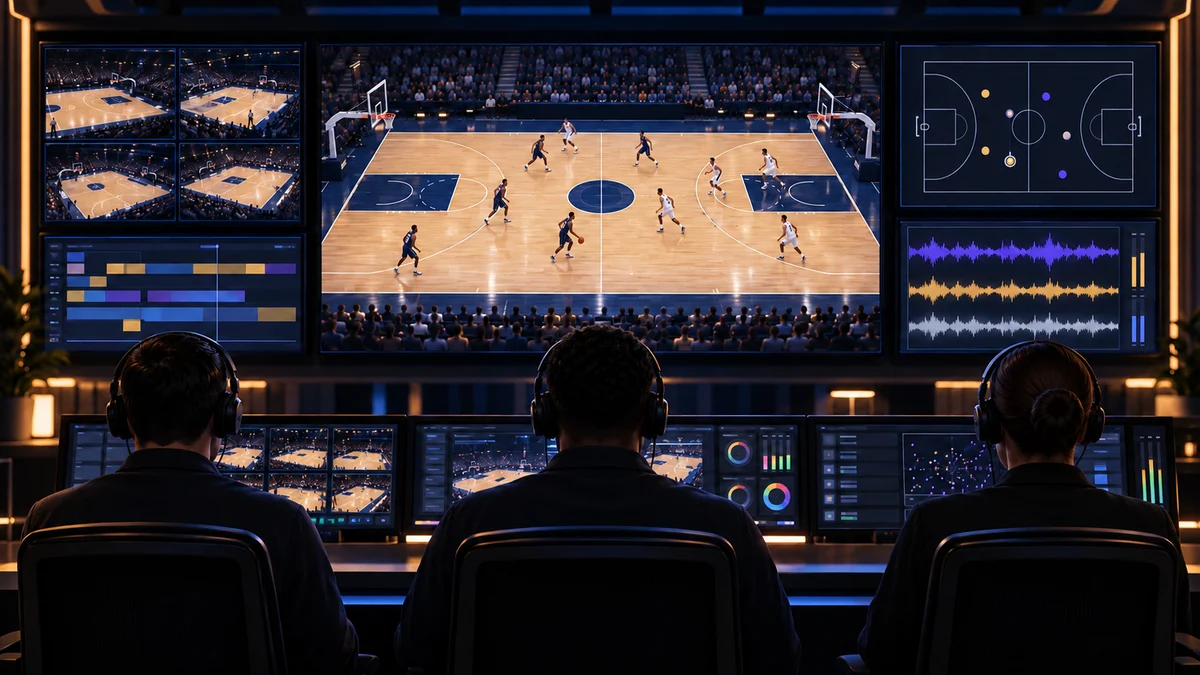
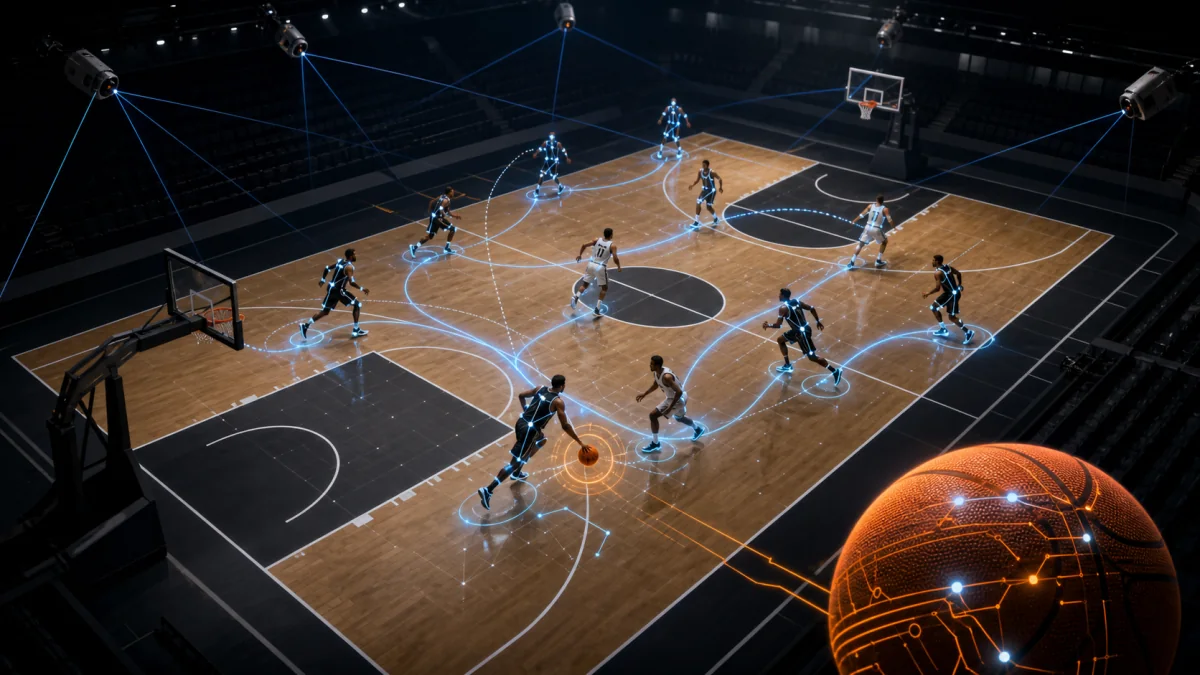
Optical tracking relies on high-resolution cameras mounted around the arena. At the elite level, these systems capture multi-angle video feeds to reconstruct player movements. For example, the NBA's advanced statistics platform processes player tracking data by analyzing 29 data points per player using machine learning and artificial intelligence. Optical systems are completely non-invasive, requiring no equipment to be worn by the players. However, they do not directly measure force or physiological strain; instead, they estimate skeletal joint positions and run those coordinates through mathematical models.
LPS networks function like localized GPS. Anchors are placed around the gym, and players wear small radio-frequency transmitters (usually tucked into a pocket in their sports bras or jerseys). These systems excel at capturing precise court coordinates in real-time, offering highly accurate positioning data without being blocked by player crowding or poor lighting.
IMUs are wearable microchips containing accelerometers, gyroscopes, and magnetometers. Rather than measuring where a player is on the court, IMUs measure how the player's body moves through space. They capture high-frequency physical forces, such as the rapid deceleration of a hard stop or the explosive vertical force of a jump, making them invaluable for biomechanical analysis.
| Technology | What It Measures Directly | What It Estimates/Calculates | Primary Limitation |
|---|---|---|---|
| Optical Cameras | 2D/3D pixel coordinates, visual player presence | Skeletal joint angles, speed, acceleration, player identity | Occlusion (players blocking each other), poor local gym lighting |
| Local Positioning (LPS) | X, Y, Z court coordinates via radio frequencies | Velocity, distance run, cumulative mechanical load | Requires expensive hardware installation in every gym |
| Inertial Wearables (IMU) | Linear acceleration, angular velocity, magnetic orientation | Jump height, step counts, directional change intensity | No inherent court-position context without LPS integration |
FIBA's Push for Standardization and Safety
As wearable and optical technologies proliferated, basketball's international governing body recognized the need for strict quality control. To address this, FIBA launched an Approval Program for Tracking Solutions to drive innovation and ensure safety and consistency across the sport. This program establishes a rigorous framework that separates scientifically validated tools from unproven consumer gadgets.
The evaluation process began with FIBA's inaugural Tracking Solutions Test Event in Leiria, Portugal, which utilized a gold-standard motion capture system with experts from Victoria University to benchmark commercial systems. During this event, the tracking solutions evaluated by FIBA included inertial measurement units, local positioning systems, and optical tracking technologies.
To receive the FIBA stamp of approval, systems must undergo rigorous laboratory and on-court testing. Specifically, FIBA's testing protocols assess performance metrics such as positional accuracy, speed, acceleration and deceleration patterns, jump height, and load index. Furthermore, safety is treated with equal importance to data accuracy. Under the program, Sports Labs performs a lab-based safety assessment of wearable devices focusing on size, shape, weight, and impact performance to ensure that a device will not injure a player during a collision.
This validation pipeline took a major step forward at FIBA's second major testing event, which was overseen by the Institute for Sports Tech Standards (ISTS) to evaluate data accuracy against reference values. This paved the way for a historic milestone: the FIBA Women's Basketball World Cup 2026 in Berlin will be the first major FIBA tournament to feature approved tracking technology on the court.
Under the updated FIBA Internal Regulations Book 2, Article 86, approved wearable tracking solutions may be used in official competitions, provided they are worn safely in the specified mounting position. This regulatory shift ensures that elite players can gather actionable, safe, and highly accurate data during peak competition. Looking to the future, FIBA plans to facilitate an Automated Video Solutions (AVS) test event later in 2026 to assess camera-based systems, ensuring that non-wearable optical systems are held to similarly high standards.
Connecting External Workload to Internal Physiological Stress
For coaches and sports scientists, the primary goal of tracking technology is optimizing performance while mitigating injury risk. To do this effectively, programs must distinguish between external workload and internal workload.
External workload is the physical work performed by the athlete on the court. This includes metrics like total distance run, acceleration and deceleration counts, jump counts, and mechanical load indexes. These are objective physical actions measured directly by IMUs and LPS systems. However, external workload only tells half the story. It does not explain how hard the athlete's body had to work to perform that physical tasks.
Internal workload is the physiological and psychological response to that external stress. It is measured using heart rate monitors, heart rate variability (HRV), and subjective metrics like the Session Rating of Perceived Exertion (sRPE). For example, a high-intensity defensive drill will register a specific external load. However, a player who is sleep-deprived, recovering from an illness, or returning from an injury will experience a much higher internal heart-rate response and sRPE than a fully recovered teammate performing the exact same drill.
By monitoring the relationship between internal and external workloads, coaching staffs can identify when a player is entering a high-risk fatigue state. If a player's external output (e.g., jump height or sprint speed) begins to drop while their internal response (e.g., average heart rate) spikes during standard drills, it serves as an objective warning sign to adjust their training volume before an acute injury occurs.
Smart Balls and Shot-Tracking: Connecting Exertion to Skill
While tracking physical workloads is crucial for conditioning, basketball is ultimately a game of skill. The newest frontier in sports technology is connecting physical exertion directly to technical execution, particularly shooting mechanics.
Smart basketballs embedded with ultra-lightweight IMU sensors measure spin rate, launch angle, entry angle, and release time. When combined with computer vision systems, coaches can see exactly how physical fatigue alters a player's shooting form. For instance, as a player's cumulative external workload increases over a practice, a computer vision system can detect if their release point drops or if their knee flexion decreases during jump shots.
This integration allows coaches to design highly specific basketball workouts that train players to maintain elite shooting mechanics under late-game fatigue conditions. Instead of simply shooting spot-up jumpers when fresh, players can be tracked to ensure they are replicating game-speed movements and maintaining structural integrity in their shot even when their physical load metrics indicate high fatigue. To explore how automated systems evaluate these mechanics, check out our detailed analysis on whether AI can coach your basketball shot.
What This Means for Players and Coaches
For players, tracking technology provides an objective blueprint for development. Instead of relying on subjective feedback, players can see concrete proof of their quickness, lateral movement speeds, and jump mechanics. It removes the guesswork from recruiting and scouting, allowing athletes to present verified physical profiles to coaches and scouts.
For coaches, these systems revolutionize practice planning. Instead of guessing how demanding a particular defensive drill is, coaches can look at the cumulative load index to structure practices scientifically. They can ensure that "light" recovery days are truly light, and that "heavy" contact days adequately prepare players for the physical demands of upcoming games.
However, implementing this technology requires a shift in coaching philosophy. Data should never replace communication. The most successful programs use tracking data as a conversation starter with athletes, combining objective metrics with how the player actually feels to make collaborative decisions on training volume and recovery.
Limitations: When the Data Lies
Despite the incredible advancements in sports science, tracking technology is not a magic bullet. Programs must be aware of several critical limitations to avoid falling into the trap of "paralysis by analysis."
First, optical pose-tracking is highly dependent on environment. While elite arenas feature multi-camera arrays that process 29 data points per player, these systems degrade significantly in local high school or community gyms. Single-camera setups or spaces with poor lighting often struggle with occlusion, leading to dropped tracking, misidentified players, and highly inaccurate velocity calculations.
Second, many advanced metrics marketed by vendors are actually black-box algorithmic estimations rather than direct measurements. For example, in elite broadcasts, systems use complex models to calculate advanced metrics. The NBA and AWS use AI algorithms to identify the primary defender in real-time for their "Defensive Box Score" metric. Similarly, their "Shot Difficulty" metric evaluates shot attempts using Expected Field Goal % based on shooter orientation, defensive contest details, and court positioning. Even defensive spacing is modeled, as their "Gravity" metric processes optical tracking data 60 times per second using neural networks to measure defensive attention and space creation. While these metrics are incredibly engaging for fans and useful for high-level analysts, they are statistical models, not absolute physical truths. Coaches must not mistake an algorithmic estimation of "defensive pressure" for a direct, flawless measurement of defensive effort.
Finally, without dedicated sports science personnel to filter out the noise, tracking systems can overwhelm a coaching staff. Raw data is useless without context. If a program does not have the staff to clean, analyze, and translate the data into actionable coaching adjustments, the investment in expensive tracking hardware will likely go to waste.
Frequently asked questions
What does basketball player tracking measure?
Tracking systems can estimate player and ball locations, movement paths, speed, spacing, and event data, depending on the cameras, sensors, and software used. The output is a measurement layer that still needs basketball context and quality checks.
Can tracking data explain why a play succeeded?
Not by itself. Tracking can describe where and when movement occurred, but tactical intent, defensive decisions, communication, and execution still require interpretation. A precise coordinate does not automatically establish the cause of an outcome.
What can make basketball tracking data inaccurate?
Occlusion, camera placement, calibration, player overlap, ball speed, lighting, and model limitations can affect detection. Reliable use requires validation against video or another trusted reference, especially when the result informs coaching or player evaluation.