
The short version: AI-driven automated video solutions (AVS) and player tracking are transforming basketball, but physical limitations like occlusion and fast transitions persist. FIBA's 2026 testing program is establishing independent standards to separate marketing hype from real-world performance.
Key takeaways
- FIBA's 2026 technology approval roadmap, including the June 2026 Maverik Center test event, is establishing independent standards to verify the accuracy of player tracking and automated video solutions.
- Automated Video Solutions (AVS) use AI to capture and produce game footage with minimal human intervention, but they face inherent physical limitations like player occlusion and rapid transition blind spots.
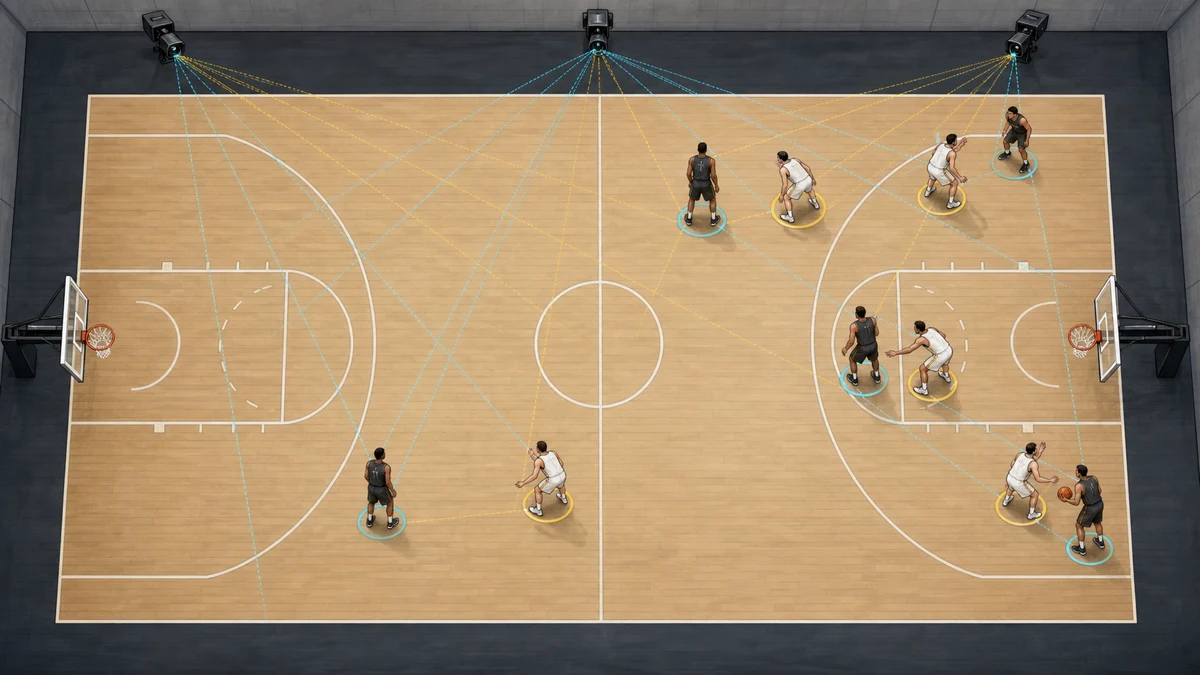
- Single-camera setups are highly susceptible to tracking dropouts and perspective distortion compared to multi-camera optical arrays.
- Wearable tracking devices offer direct physical load metrics but require rigorous safety and impact testing by Sports Labs, whereas optical systems bypass safety testing but struggle with visual occlusion.
- Buyers must look beyond marketing claims and initial hardware costs, factoring in recurring subscription paywalls and total cost of ownership over several years.
The 2026 FIBA News Peg: Standardizing Basketball's AI Revolution
The intersection of artificial intelligence and basketball has moved rapidly from experimental laboratories to local community courts and elite professional arenas. Across all levels of play, leagues, clubs, and parents are seeking ways to capture, analyze, and share game footage without the logistical burden of manual camera operation. As the demand for automated video solutions grows, basketball's governing bodies are stepping in to establish rigorous, independent benchmarks. FIBA's active 2026 technology approval and testing roadmap represents a critical milestone in this transition, aiming to separate verified hardware capabilities from aggressive vendor marketing claims.
A key component of this roadmap recently concluded in the United States. FIBA's second Tracking Solutions test event took place from June 3-5 at the Maverik Center in Salt Lake City, USA. This event was specifically designed to prepare for the FIBA Women's Basketball World Cup 2026 in Berlin, which will be the first major FIBA tournament to feature approved tracking technology. During this three-day event, the Institute for Sports Tech Standards (ISTS) oversaw the assessment of five systems across four companies to evaluate accuracy against reference values. FIBA takes next step in Tracking Solutions approval process ahead of Women's World Cup in Berlin | About FIBA
While player tracking focuses on data extraction, the visual capture of the game itself is undergoing a parallel standardization process. FIBA plans to facilitate an Automated Video Solutions (AVS) test event later in 2026 to assess camera-based systems for automated recording, production, and analysis.
How Automated Video Solutions (AVS) Work: Capture, Tracking, and Production
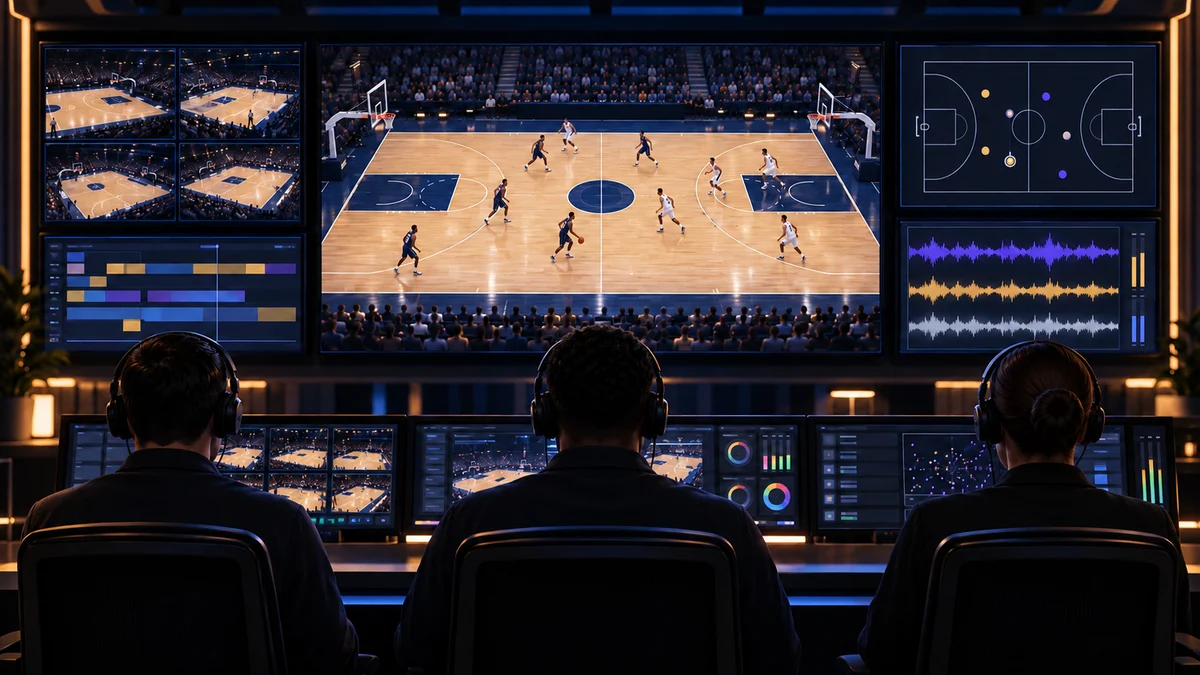
To understand why these standards are necessary, we must first look at how these systems operate. Powered by artificial intelligence, Automated Video Solutions (AVS) capture and produce game footage with minimum human intervention. FIBA to host test events for Automated Video and Tracking Solutions in Doha | About FIBA
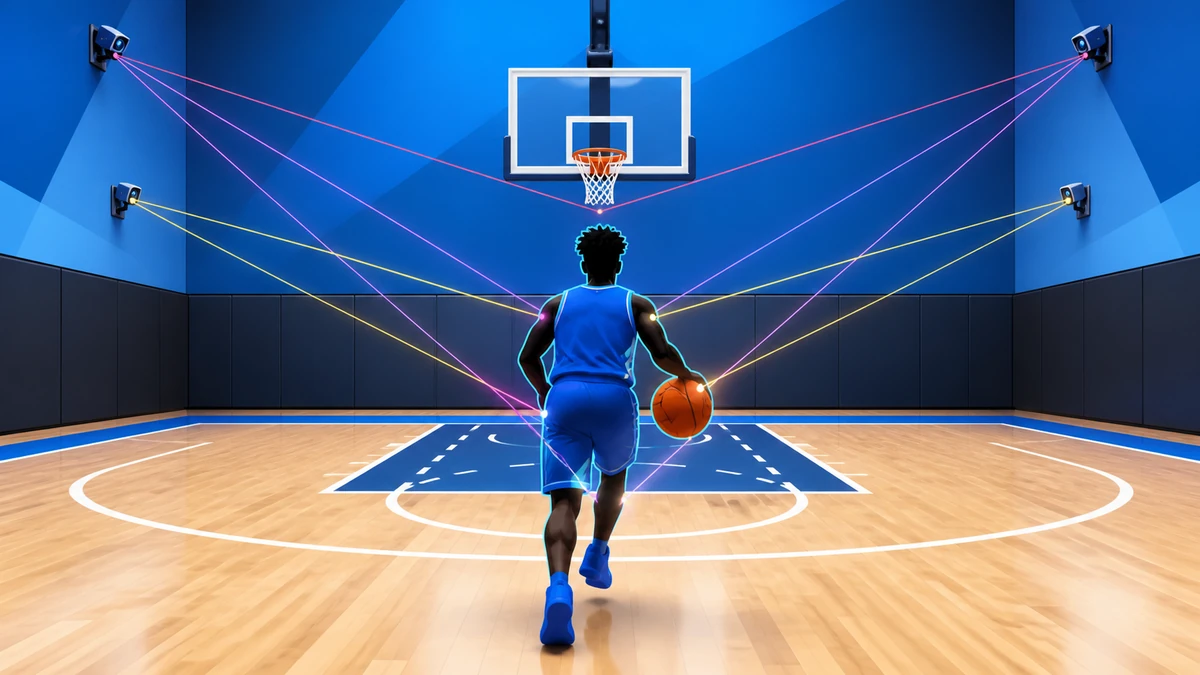
These systems typically rely on either a single high-resolution panoramic camera or a multi-camera array. The raw panoramic feed is processed locally or in the cloud, where deep learning models track player movements, detect transitions, and identify key events like shots and whistles. For clubs and schools, this technology promises a dramatic reduction in production costs, turning any gym into a self-broadcasting arena.
- Virtual Panning and Zooming: Algorithms dynamically adjust the frame to keep the ball and the majority of active players in view.
- Automated Highlight Generation: Software detects sudden shifts in player velocity, referee whistles, or audio spikes to clip key plays.
- Basic Statistical Logging: Some advanced platforms attempt to log shot attempts, makes, and misses based on visual cues.
The Physical Boundaries: Where AI Cameras and Optical Tracking Fail
Automated video systems can have different physical setups.
Robust ball tracking under occlusion is a key challenge in sports video analysis, affecting event detection and officiating. [2508.09650] TOTNet: Occlusion-Aware Temporal Tracking for Robust Ball Detection in Sports Videos
In a study titled 'TOTNet: Occlusion-Aware Temporal Tracking for Robust Ball Detection in Sports Videos', researchers developed the TOTNet model in collaboration with Paralympics Australia. This model uses 3D convolutions, visibility-weighted loss, and occlusion augmentation to improve tracking under partial and full occlusions. When evaluated on four racket sports datasets, the TOTNet model reduced root-mean-square error (RMSE) from 37.30 to 7.19 and improved accuracy on fully occluded frames from 0.63 to 0.80.
Wearables vs. Optical Tracking: FIBA's Safety and Accuracy Standards
FIBA's Equipment & Venue Centre has launched an Approval Program for Tracking Solutions to drive innovation and ensure safety and consistency in basketball. FIBA launches Approval Program for Player Tracking Solutions and holds inaugural test event | About FIBA
FIBA held its first-ever Tracking Solutions Test Event in Leiria, Portugal, at the Pavilhao do Lis, using a motion capture system with experts from Victoria University. The tracking solutions evaluated during this inaugural event included inertial measurement units (IMUs), local positioning systems (LPS), and optical tracking technologies.
FIBA's testing protocols replicated basketball-specific movements and game actions to assess positional accuracy, speed, acceleration and deceleration patterns, jump height, and load index.
Sports Labs is tasked with carrying out a lab-based safety assessment of wearable devices, focusing on size, shape, weight, and impact performance. Under FIBA Internal Regulations Book 2, Article 86, FIBA Approved wearable tracking solutions may be used in competitions if worn safely in the specified mounting position.
What This Means for Players, Coaches, and Parents: A Buyer's Guide
For coaches, club directors, and parents looking to invest in automated video technology, navigating the market requires a critical eye. Vendors frequently advertise 'perfect' tracking and 'instant' analytics, but the real-world utility of these systems depends heavily on your specific environment. A single-camera system mounted on a tripod may perform adequately for a slow-paced youth game with clear spacing, but it will likely struggle to keep up with rapid transitions, full-court presses, and dense half-court sets typical of high-school or collegiate play.
Furthermore, buyers must look beyond the initial hardware price tag. Many automated video platforms operate on a software-as-a-service (SaaS) model, locking advanced analytics, cloud storage, automated highlights, and sharing capabilities behind expensive, recurring subscription paywalls. Before purchasing, clubs should calculate the total cost of ownership over a three-to-five-year period, factoring in these recurring fees and the potential need for manual video review when the automated tracking fails.
| Technology Type | Primary Capture Method | Key Strength | Primary Limitation | FIBA Safety Testing Required? |
|---|---|---|---|---|
| Single-Camera AVS | Single optical sensor / mobile rig | Affordable, easy setup | High occlusion, no depth perception | No |
| Multi-Camera Optical | Fixed multi-camera array | High accuracy, no player gear | Expensive, complex installation | No |
| Wearables (IMU/LPS) | On-body sensors & local receivers | Direct physical load metrics | Requires physical wear, contact risk | Yes (Sports Labs) |
The Path Forward for Basketball Technology
The democratization of basketball video and analytics allows players to review their games and share highlights. By understanding the options available, buyers can make informed decisions for their athletes and coaching staffs.