
The short version: Confirm the event rules, schedule, documents, and team meeting instructions first. Add transport and between-game arrangements, ask about the warm-up window, and review the surrounding practice calendar. Keep individual health and nutrition decisions separate from a generic checklist, and ask the player whether they want a post-game conversation.
Key takeaways
- Use the event’s current documents rather than assumptions from another tournament.
- Separate game times from team arrival and meeting instructions.
- Review practices and structured training alongside the games.
- Ask the player whether they want to discuss the game before starting a debrief.
Start with the event, not a generic packing list
An AAU basketball tournament weekend plan can be a single shared note: the official schedule, venue details, registration requirements, team meeting times, and arrangements between games. Begin with the organizer’s information and then add your family’s choices. Treat the checklist below as an adaptable planning format, not a team rulebook, nutrition prescription, or promise of better performance. You can use it whether you are the player carrying the bag, a parent arranging transport, or a coach writing the team message. 2026 AAU Boys Basketball Handbook
The 2026 AAU Boys Basketball Handbook uses current NFHS rules with AAU modifications. It also requires current-year membership for the athletes and non-athletes on the roster. That is the scope of this handbook: do not substitute it for a different organizer’s competition document or assume that a remembered rule from another event applies. For the broader club-basketball context, see our AAU basketball guide; here the focus is the practical weekend in front of you. AAU basketball guide
Suggested first questions: Which division did the team enter? Where is the latest schedule posted? Who can confirm a court change? Does registration happen separately from the first game? Which adult is the team’s event contact? Put the answers beside the relevant organizer link. Label anything not yet confirmed as a question, rather than copying it into the plan as a settled fact. Choose one person to post the team’s updated meeting instructions, while each family confirms its own transport arrangements.
Confirm documents and arrival arrangements
The AAU handbook requires photo-identification evidence for eligibility to be available for review at licensed competitions. Its grade-based provisions also specify grade documentation where applicable. Check the relevant division section with the team administrator; this article is not an eligibility ruling for an individual player. The handbook’s registration section also describes a head-coach meeting with an AAU commissioner to review tournament rules and expectations. Ask who is handling those responsibilities before departure.
For your own arrival note, list the venue’s full name, street address, entrance, parking instructions, registration location, and the team’s meeting point. Keep a separate line for the actual game time. An example message might say: meet with the team at the entrance named by the coach, then proceed to the assigned court together. Fill in real details only after confirmation. If two facilities have similar names, include their addresses rather than relying on a nickname from a group chat.
You might divide the bag check into player items and adult-held documents. Player items can include the requested uniforms, basketball shoes, spare socks, a towel, a labeled water bottle, and whatever equipment the coach has asked for. The designated adult can check the event documents and contacts. Adapt that list to the venue and the player; it is a packing suggestion, not an official requirement. Ask permission before sharing a child’s identification or other personal documents in a team conversation.
Write a between-games plan that leaves room for changes
Use three lines for each gap: where the player will be, who is responsible for transport or supervision, and when the team next meets. You can add a meal location, food preferences, and where water is available without setting universal portions or fluid targets. For individual dietary, medical, or recovery needs, use the player’s own qualified guidance. This checklist does not assess those needs. Keep a fallback question beside an uncertain arrangement, such as whether the team will stay at the venue if the next game moves. NBA and USA Basketball Youth Guidelines
The NBA and USA Basketball youth guidelines caution against multiple games in a day, particularly on consecutive days. They recommend additional time away from sports activities after such events. Their maximum participation figures are limits, not targets; the guidance explicitly notes that participation below a maximum may still be inadvisable. Include the surrounding practices and structured training when reviewing the calendar, since the guidelines count those activities as organized basketball too. These are participation guidelines, not a replacement for an event’s playing rules.
A useful format for discussion is a short calendar covering the day before departure through the first days after the event. Write the existing commitments first: school, travel, games, team practice, and other organized sessions. Then ask the coach and parent which optional activities belong on that calendar. Leave individual decisions to the adults and professionals responsible for the player. Our comparison of AAU and high-school basketball covers the wider setting; this weekend note can stay focused on the actual commitments. comparison of AAU and high-school basketball
Check the warm-up window with the coach
Warm-up arrangements can be event-specific. For example, the 2026 USA Basketball U.S. Open Championships document lists a ten-minute pregame warm-up window that may be shortened for time constraints, with a four-minute minimum. That is a rule for that competition, not an AAU-wide allowance. Ask the organizer about the actual event and ask the coach when the players should be ready. Do not turn the scheduled tip-off time into an assumed amount of available court time. 2026 USA Basketball U.S. Open Championships Rules
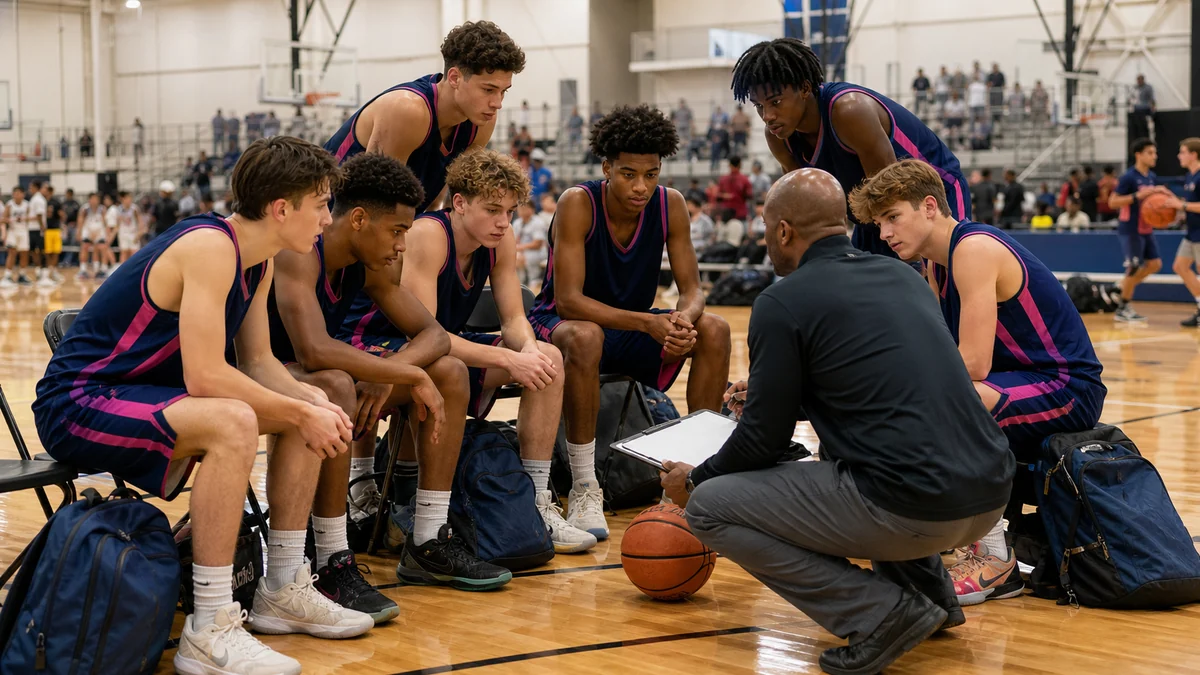
For a team note, you could separate arrival, changing, the coach’s meeting, and the on-court warm-up. Write who will confirm the court and who will lead the activity. A player’s own question might be: which part of the team routine should I join when I arrive? If space or timing differs from what the team expected, ask the coach for the adjusted instructions. This article does not prescribe a particular warm-up sequence, number of repetitions, or readiness test.
Keep optional individual practice separate from the competition schedule. If the coach has assigned a later practice session, save the relevant plan for that session instead of treating every break as another workout. You can browse the basketball workout library when discussing a future session, but a listed workout is not an instruction to add it during tournament downtime. Choose the activity with the person responsible for the player’s schedule and use the event’s actual constraints. basketball workout library
Agree on communication and the post-game conversation
Jr. NBA’s parent tips recommend cheering for all players and leaving coaching to the coaches. They also advise asking whether a child wants to discuss the game on the ride home and respecting a negative answer. That distinction can shape your weekend message: the team channel can carry logistics, while the player can choose whether to have a separate conversation about the game. A final score does not have to become the opening sentence of the car ride. Jr. NBA Parent Tips
The same parent guidance suggests truthful, specific praise and encourages players to raise playing-time questions directly with their coach. You might ask the player whether they want help wording a question, rather than deciding the answer for them. For a later review, an optional note can contain one observed moment, one question for the coach, and one thing the player wants to discuss. Describe the actual play rather than turning a single tournament into a prediction about selection, scholarships, or future ability.
Frequently asked questions
What should go in the team’s shared weekend note?
Start with the official schedule link, venue address, registration instructions, team meeting point, and the person who will post updates. Add each family’s transport arrangements separately. Treat this as an adaptable checklist, and ask the organizer or coach to confirm any item that remains uncertain.
Should a player add another workout between tournament games?
Do not treat an empty calendar slot as an automatic instruction to train. Review the full schedule with the coach and parent, including structured training and practice. The NBA and USA Basketball guidelines caution about dense competition schedules and recommend additional time off after consecutive multi-game days.
How should parents talk about a difficult game?
Jr. NBA recommends asking whether the child wants to talk and respecting the answer. If the player does want a conversation, listen and keep praise truthful and specific. Playing-time questions can be raised by the player with the coach, with parental help in wording the question if requested.