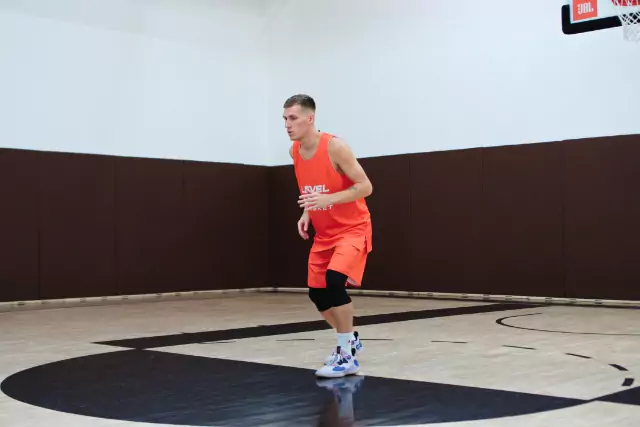
Dynamic Hamstring Stretching Powers Your First-Step Drive
You can't be explosive if your posterior chain is tight. The Dynamic Hamstring Stretch is a non-negotiable component of an elite basketball warm-up, designed for players who need to maximize their speed and verticality while strictly minimizing injury risk. Falling under the category of athletic performance and injury prevention, this movement actively lengthens the hamstring muscles while mimicking the biomechanics of running, ensuring your hips and legs are primed for high-intensity court movement.
How to Perform This Drill
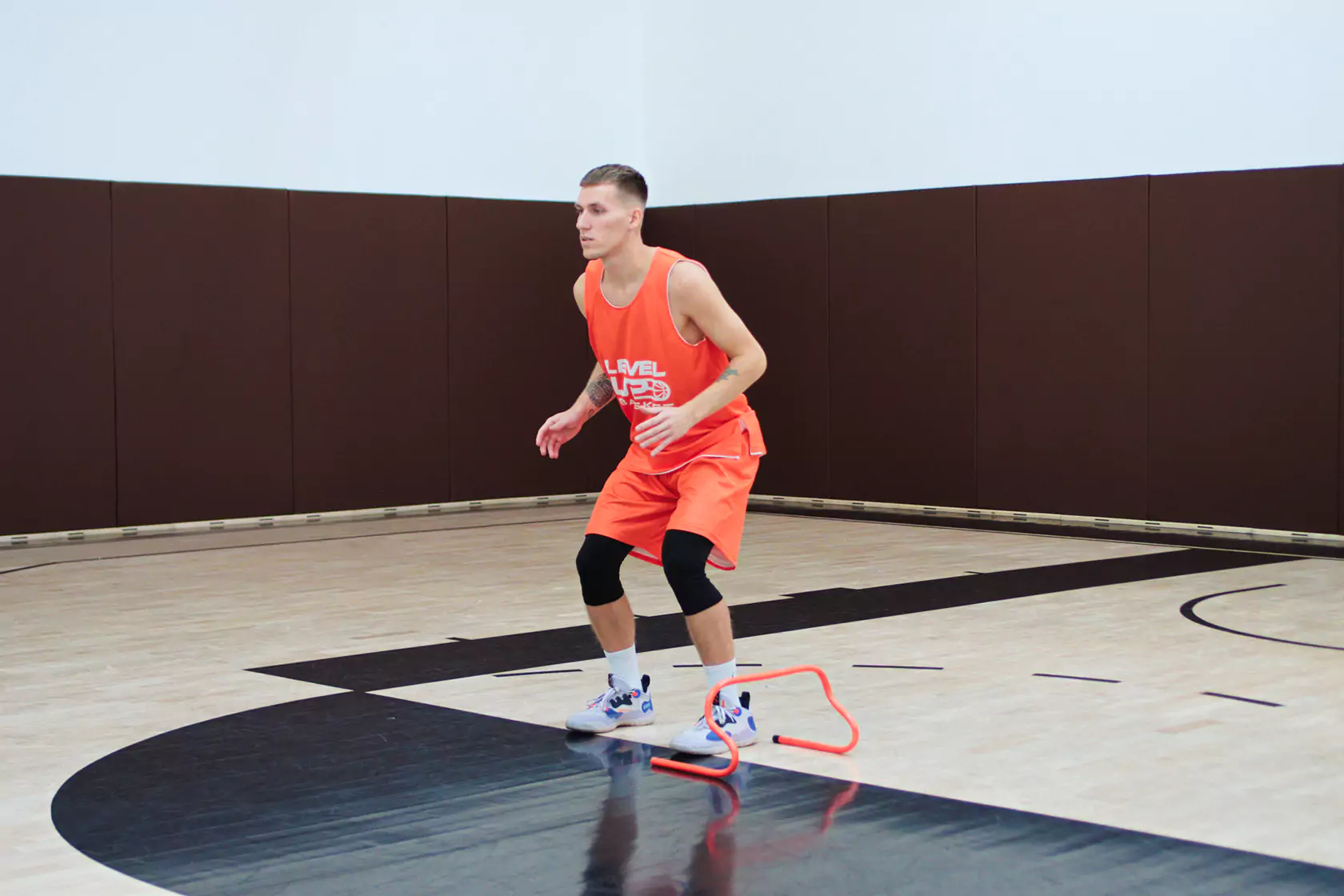
- Setup: Stand tall on the baseline with your feet hip-width apart, chest up, and core engaged. Extend both arms straight out in front of you at shoulder height.
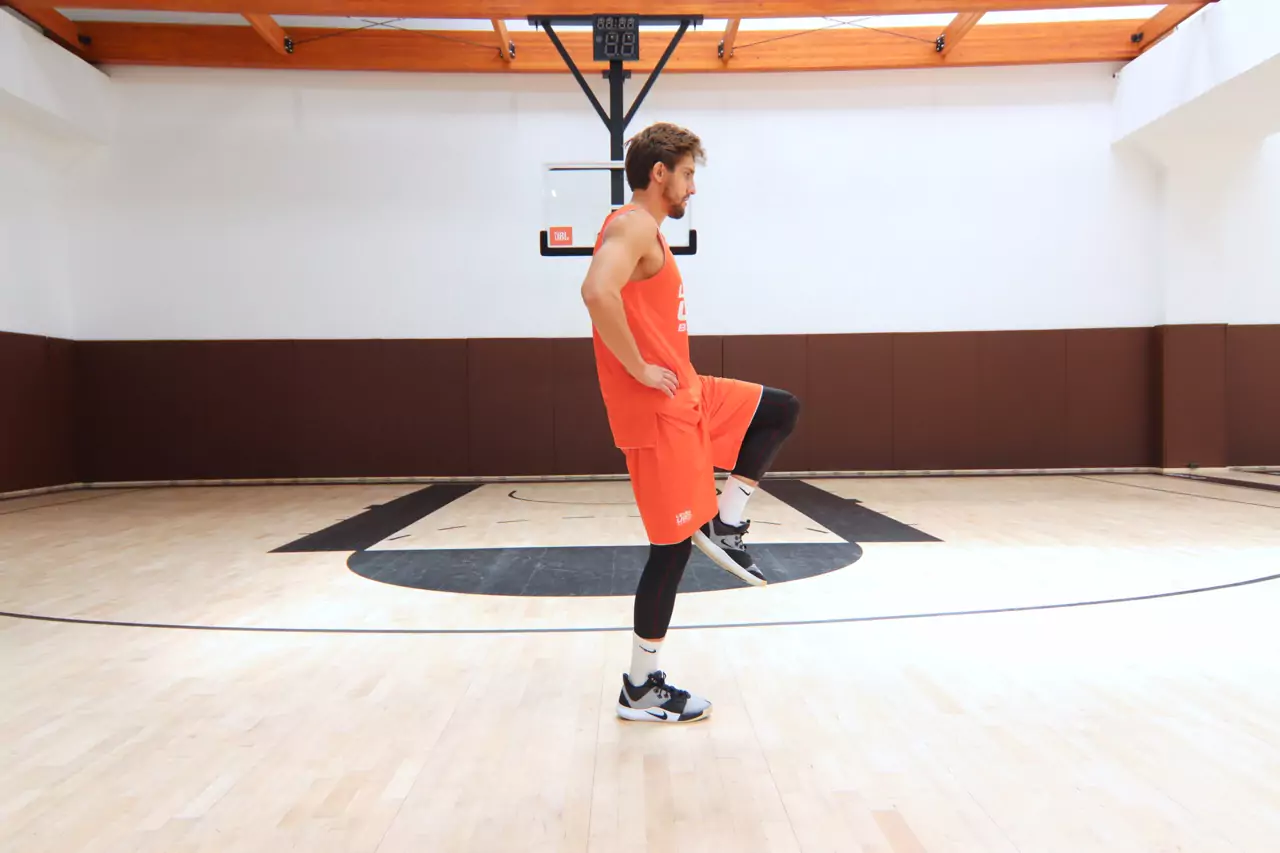
- Initiate: Step forward with your left foot, planting it firmly to create a stable base.
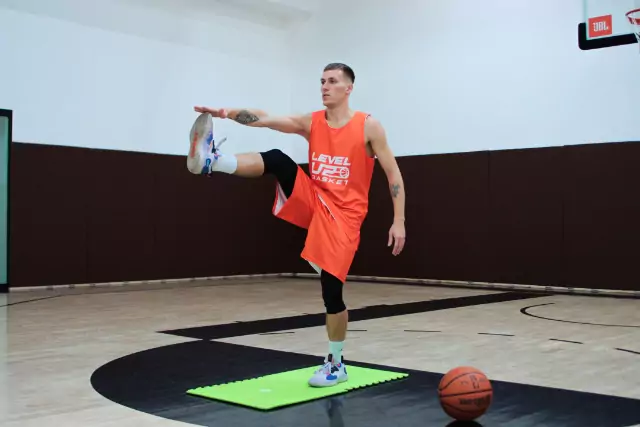
- Execute: Swing your right leg straight up in front of you, keeping the knee locked and the toes pointing toward the ceiling (dorsiflexion).
- Reach: As the leg rises, reach your left hand forward to meet your right toes, maintaining an upright torso without hunching over.
- Reset: Lower the right leg in a controlled manner and step forward onto it, immediately transitioning into the next repetition.
- Alternate: Repeat the movement by kicking the left leg up to meet the right hand. Continue this pattern for 10–15 yards down the court.
Why This Drill Works
Unlike static stretching, which can actually reduce muscle power before a game, dynamic stretching activates the nervous system and increases blood flow while taking joints through a full range of motion. By combining the forward walking motion with the leg kick, you are simulating the active lengthening and rapid contraction your hamstrings undergo during sprints and defensive slides. This specific drill improves functional flexibility in the posterior chain, allowing for a longer stride length and reducing the likelihood of hamstring strains during explosive bursts to the rim.
Pro Tips
- Stay Tall: Do not round your back or crunch your torso forward just to touch your toes. It is better to kick lower with perfect posture than to kick high with poor form.
- Flex the Toes: Keep your toes pulled back toward your shin (dorsiflexed) throughout the kick. This intensifies the stretch in the hamstring and calf, mimicking the foot position needed for proper landing mechanics.
- Progressive Range: Don't force your maximum range of motion on the first rep. Start with lower kicks and gradually increase the height as your muscles loosen up over the course of the distance.
- Control the Tempo: This is a controlled movement, not a ballistic swing. Avoid using excessive momentum to "whip" your leg up; use your hip flexor strength to lift the leg and control it on the way down.