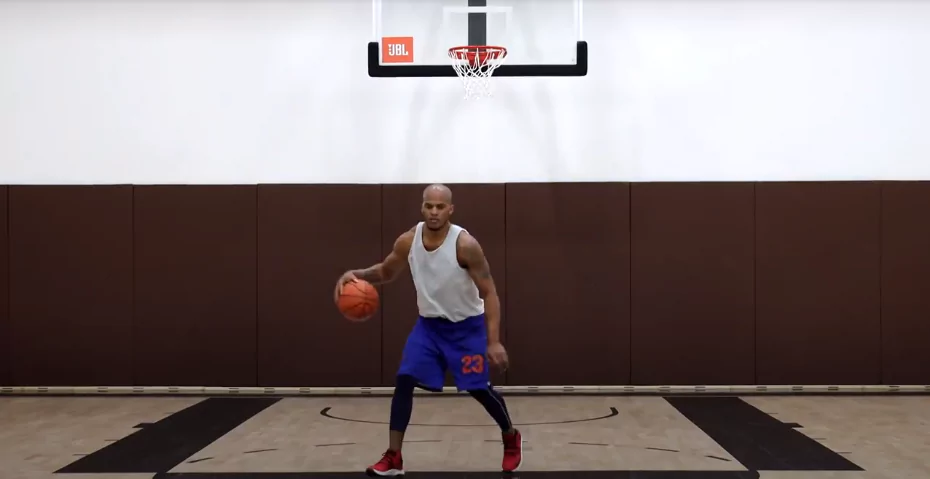
Can a Turkish Step Lull Defenders to Sleep?
The Turkish Step is a sophisticated ball-handling drill designed for guards and wings who want to master the art of changing pace and direction. By combining a "drop cross" setup with a defensive retreat and an attacking "walking" between-the-legs motion, this drill teaches you how to lull defenders to sleep before exploding past them. It is an essential workout for developing fluid hip mobility, core stability, and the ability to handle the ball in tight spaces.
How to Perform This Drill
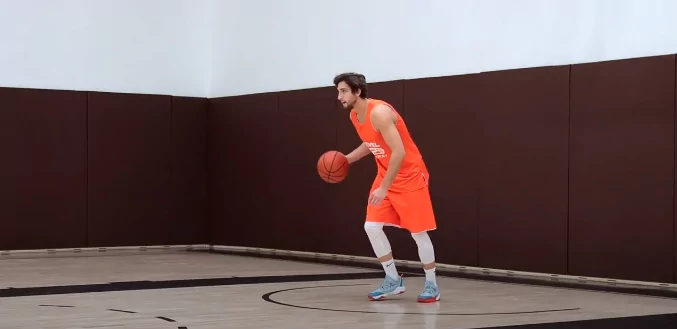
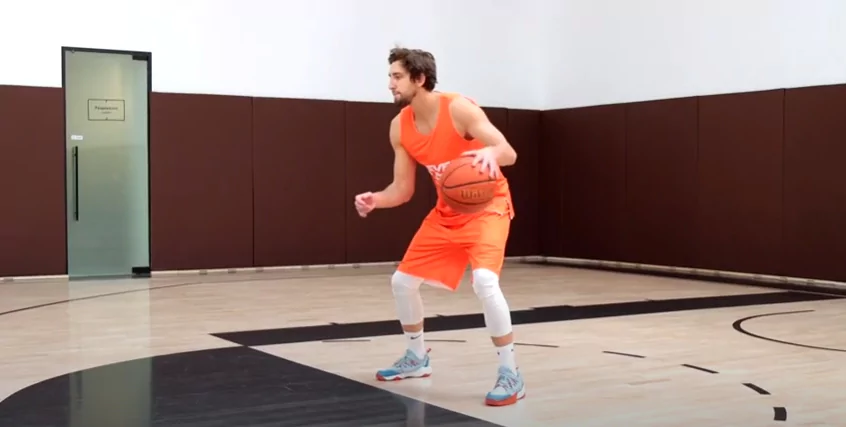
- Setup: Begin in a low, athletic stance—what we call the "low square position"—with your feet wider than your shoulders and the ball in your right hand.
- Initiate: Execute a sharp "drop cross" (crossover while dropping your hips) to your left hand, keeping your shoulders squared to the imaginary defender.
- Retreat: Immediately perform two aggressive retreat dribbles, pulling the ball back to create separation from the defense.
- Transition: After the retreat, shift your momentum forward into the "Turkish Step." This is a walking or gliding motion where you pass the ball between your legs from front to back while taking rhythmic steps forward.
- Execute: Perform 3-4 continuous Turkish Steps (walking between-the-legs dribbles), focusing on distinct footwork and rhythm rather than pure speed.
- Repeat: Reset and perform the sequence starting with the ball in your left hand.
Why This Drill Works
The Turkish Step is effective because it trains "deceleration" and "pace manipulation," which are often more valuable than raw speed. By forcing you to transition from a retreat (creating space) to a slow, rhythmic forward march (closing space), the drill mimics the hesitation moves used by elite scorers to freeze defenders. It creates a disconnect between your foot speed and your dribble speed, allowing you to read the floor and react to defensive shifts while keeping the ball protected in your body's frame.
Pro Tips
- Stay Low: Your hips must stay at the same level throughout the entire sequence. If you bob up and down, you lose your explosiveness and give the defender a target.
- Sell the Retreat: When you retreat dribble, use your eyes and off-hand to simulate protecting the ball from heavy pressure. Make the defender believe you are backing down.
- Float the Ball: On the Turkish Step portion, let the ball "hang" or float in your hand for a split second longer than usual. This hesitation is what freezes the defense.
- Disassociate: Try to keep your feet moving at a steady walking rhythm while your hands manipulate the ball speed. This separation of hand and foot speed is the hallmark of an elite handler.