2-Ball Juggling Builds Quicker Hands for Tough Catches
2-Ball Juggling is a foundational ball-handling drill designed to wake up your nervous system and sharpen your hand-eye coordination. Whether you are a lead guard or a post player, this drill forces your hands to work independently, improving your overall touch and feel for the basketball. It serves as an excellent warm-up to activate your hands and brain before diving into high-intensity dribbling combinations.
How to Perform This Drill
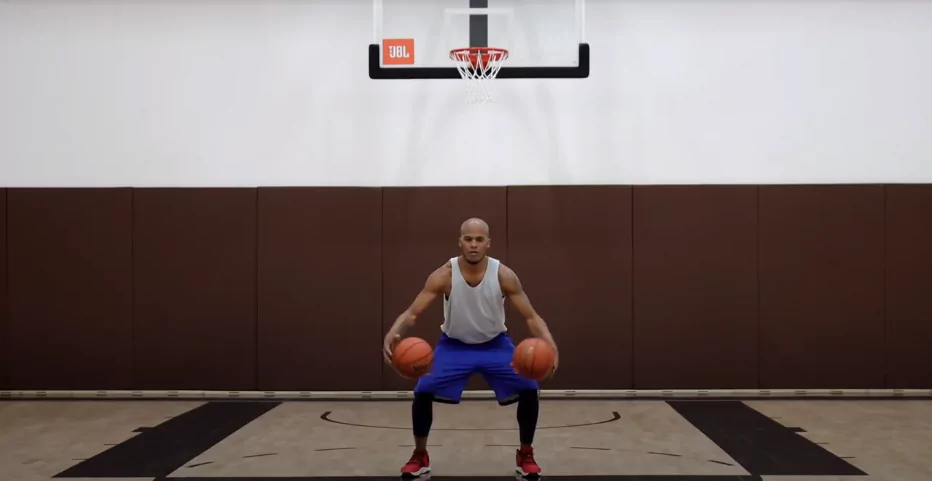
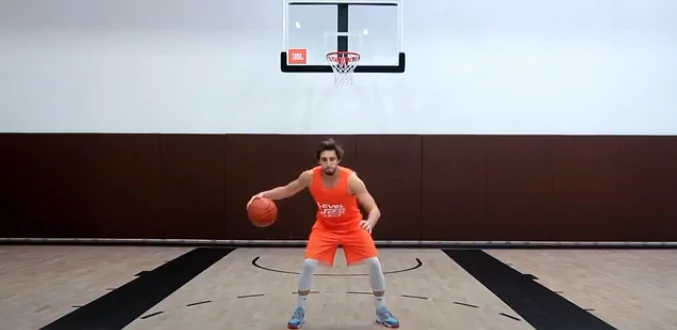
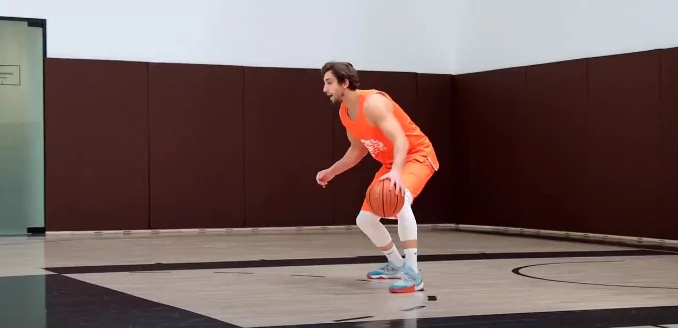
- Setup: Start in a strong, athletic stance with your feet shoulder-width apart, knees bent, and chest up. Hold one basketball in each hand at chest level.
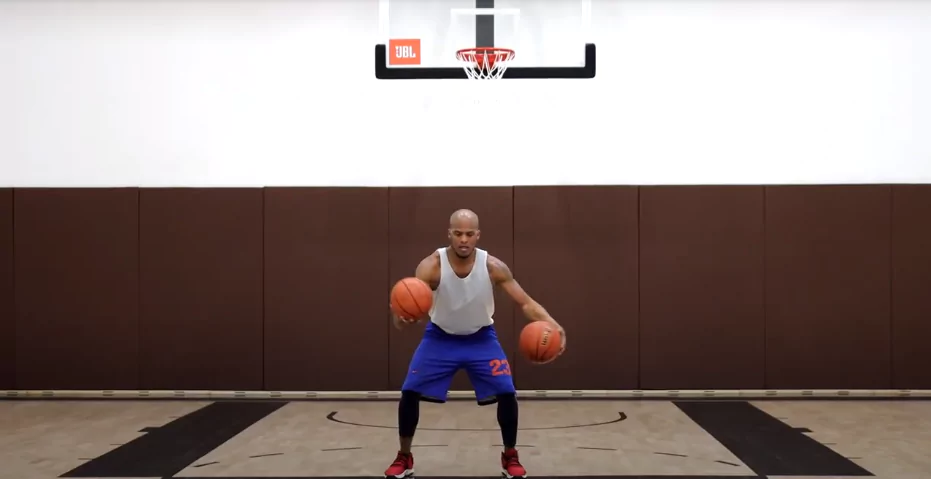
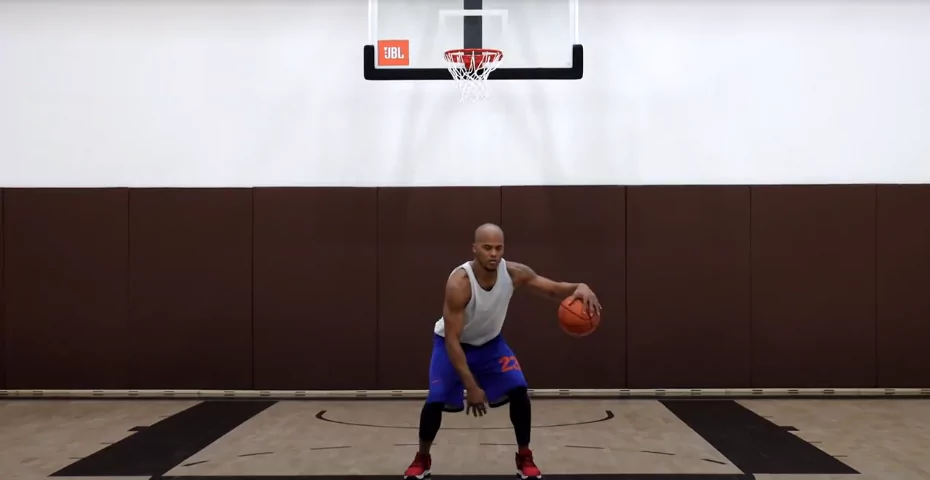
- Initiate: Begin a circular motion by bouncing the ball in your right hand across your body toward your left side.
- Transfer: As the first ball is in the air (or bouncing), quickly hand the ball currently in your left hand over to your right hand to clear space.
- Catch: Catch the bouncing ball with your now-empty left hand to complete one cycle.
- Loop: Continue this circular "bounce-pass-catch" rhythm in a clockwise direction for 30 seconds.
- Reverse: Switch the direction of the circle to counter-clockwise, bouncing from left to right, for another 30 seconds.
Why This Drill Works
This drill is effective because it utilizes the concept of progressive overload for your coordination and fine motor skills. By managing two moving objects simultaneously in a confined space, you force your brain to process spatial information faster than it does during single-ball drills. In a game situation, this translates to "soft hands"—the ability to cleanly catch bad passes, secure rebounds in traffic, and handle the ball with precision without needing to look at it.
Pro Tips
- Eyes Up: Resist the urge to stare at your hands. Train your peripheral vision to track the balls so you can see the floor during a game.
- Stay Low: Maintain your athletic base throughout the set. If your legs straighten out, you lose your center of gravity and game-readiness.
- Snap the Handoff: The transfer between hands needs to be quick and crisp. A lazy handoff leads to fumbles and breaks your rhythm.
- Push the Pace: Comfort is the enemy of progress. Go fast enough that you risk losing the ball; if you aren't making mistakes, you aren't training your nervous system to adapt.